
There was a time when a strange photograph could start an investigation. Today, it might have been generated 30 seconds ago.
Artificial intelligence has changed the game when it comes to wildlife imagery. We now live in a world where someone can create a convincing photograph or video of virtually any animal imaginable and put it in front of thousands (or millions) of people before anyone stops to ask whether it is real. For cryptozoology, that presents an enormous problem.
Cryptozoology has never enjoyed widespread acceptance within mainstream wildlife science. At its best, however, it involves something I understand very well as a wildlife journalist: collecting reports, interviewing eyewitnesses, researching historical records, examining photographs and video and going into the field to see what can actually be documented.
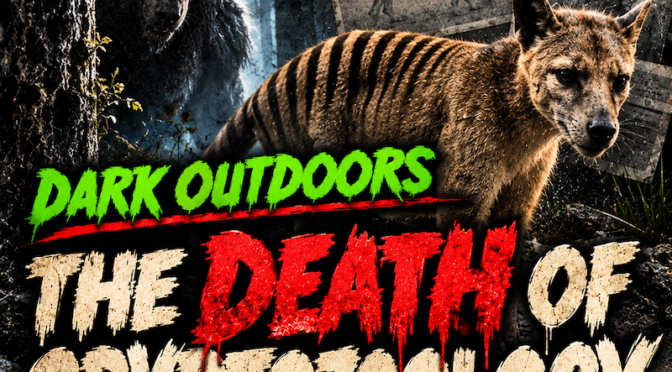
Listen to “The Death of Cryptozoology” on Dark Outdoors:
Listen on Apple Podcasts | Listen on Spotify
That doesn’t mean every report is true. Far from it. But investigation is supposed to be about separating what can be demonstrated from what cannot, and right now that process is getting harder.
When Everything Looks Real
I’ve spent years looking into unusual wildlife reports. Some turn out to have perfectly reasonable explanations. Others involve misidentification, and some are obvious nonsense. Occasionally, however, you encounter something that leaves legitimate questions.
The problem today is that those categories are becoming increasingly difficult for the average person scrolling through social media to distinguish. AI-generated wildlife images have become astonishingly convincing. Videos can be manipulated, old photographs can be given completely new stories and real wildlife footage can be removed from its original context and presented as something it isn’t.
Then the algorithms take over, and the most sensational version frequently travels farther than the correction. That doesn’t just hurt cryptozoology. It damages public understanding of wildlife in general.
The Credibility Problem
There is another problem that technology cannot be blamed for: standards matter.
If every strange sound in the woods becomes evidence of an unknown creature, eventually none of it means anything. If every blurry photograph is presented as proof before obvious explanations are investigated, credibility disappears. The same applies to eyewitness accounts.
I believe eyewitnesses should be treated respectfully. I’ve interviewed enough people over the years to know that sincere people can report extraordinary things, but sincerity is not the same thing as proof. That’s where investigation comes in.
Can the location be verified? Does the description match known wildlife? Were there tracks, photographs or other witnesses? Does the timeline hold together? Is there a reasonable conventional explanation? Those aren’t questions designed to destroy a mystery. They’re the questions that make investigating one worthwhile.
But It Cuts Both Ways
There is another side of this conversation that deserves attention. Skepticism is healthy and, in fact, essential. But skepticism has to operate by the same rules.
If extraordinary claims require evidence, claims supposedly disproving extraordinary things should be examined carefully, too. A confident conclusion isn’t automatically a scientific one simply because it supports the conventional explanation.
That issue is about to become particularly interesting. A forthcoming film dealing with this world is already raising questions that I believe deserve examination—not because I have any interest in blindly defending cryptozoology, but because evidence and methodology should matter regardless of which conclusion someone wants to reach.
I’ll have more to say about that. For now, I’m asking a different question: Has AI, social media sensationalism and declining standards of evidence brought us to the death of cryptozoology, or has it simply made genuine investigation more important than ever?
That’s the subject of the latest episode of Dark Outdoors.
Because the outdoors has a dark side.
Follow Chester Moore on the following social media platforms
@gulfgreatwhitesharksociety on Instagram
To support the efforts of Higher Calling Wildlife® click here.
Subscribe to the Dark Outdoors podcast on all major podcasting platforms.
Higher Calling Wildlife on Facebook
Email Chester at chester@chestermoore.com.