
Chester Moore Files #3
There are images you see as a kid that never completely leave you. For me, one of them came from a strange 1981 shark documentary called Great White Death. I was already fascinated with sharks, and although this movie wasn’t formative for me in the way Jaws or the work of Jacques Cousteau was, it definitely fed that fascination. There were enormous sharks, divers entering dangerous waters, frightening attack accounts and that almost otherworldly mystery surrounding what might be swimming beneath the surface.
Then there was the human skull.
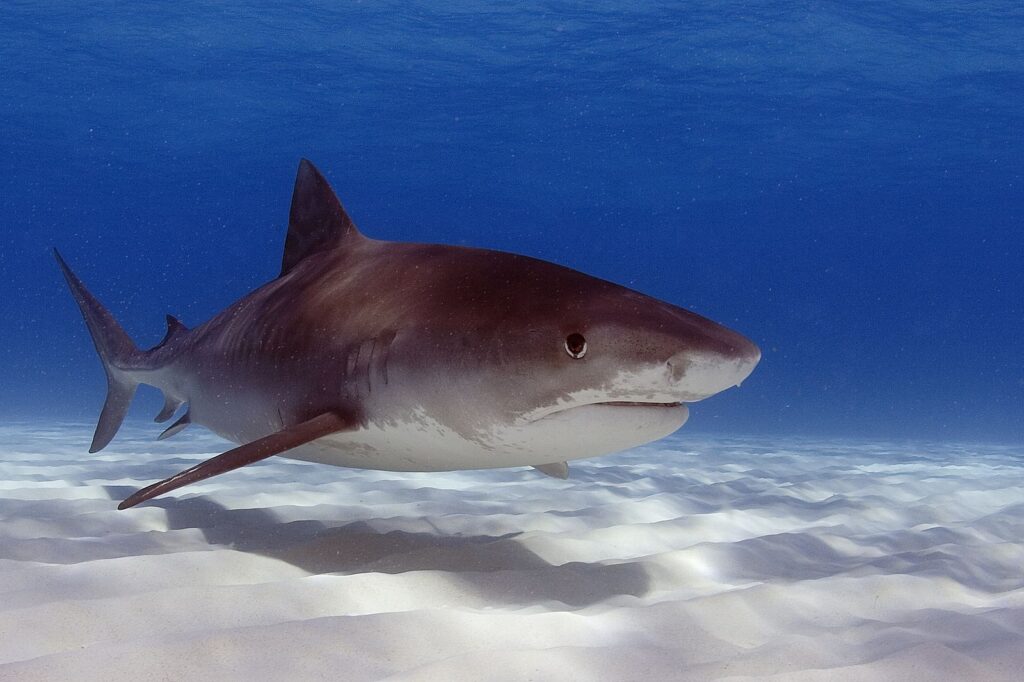
During a segment involving shark-control operations in South Africa, Great White Death shows viewers what the narration says is a human skull recovered from a large shark. The narration describes it as belonging to someone who had died only days earlier. The animal visually associated with the sequence appears to be a tiger shark, although the narration itself does not specifically identify the species.
As a kid, I wasn’t sitting there contemplating documentary ethics, editing or whether something had been reconstructed for the camera. I was looking at a human skull that the movie was telling me had come out of a shark. That’s the kind of thing a kid fascinated with both wildlife and the darker side of the world remembers.
Watching Great White Death decades later raises questions I never thought to ask back then. What exactly were we watching? How much was straightforward documentary footage? How much was reconstructed? And was that human skull really removed from the shark we were being shown?
Welcome to one of the strangest files in shark-film history.
Sharks, Death and Glenn Ford
Released in 1981, Great White Death was written and directed by Jean-Patrick Lebel and narrated by legendary Hollywood actor Glenn Ford. Ford’s familiar, authoritative voice adds an interesting dimension to the production because even some of the film’s most sensational claims are delivered with the seriousness of a traditional wildlife documentary.
The movie begins with a genuinely intriguing premise. Humanity had reached the moon while vast portions of our own oceans remained mysterious, and sharks are introduced as creatures that have occupied an unusual place in the human imagination, sometimes revered and sometimes feared.
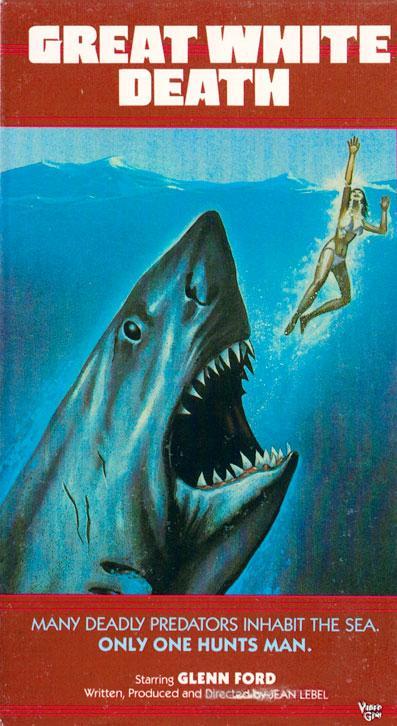
When the great white takes center stage, however, things get considerably darker. The shark is described as an exterminator, monarch and “master pirate of the deep,” while the film repeats claims about enormous 30-foot great whites and emphasizes their ability to inflict devastating injuries. Coming only six years after Jaws turned the great white into perhaps the ultimate real-life horror icon, Great White Death wasn’t shy about tapping into the fear surrounding these animals.
Some of the language sounds extreme today, but the underlying danger should never be dismissed. Great white sharks are potentially dangerous animals. People have been killed, survivors have suffered catastrophic injuries and some have lost limbs. I never want to promote shark conservation in a way that minimizes what attack victims or their families have experienced.
We don’t have to pretend a great white shark is harmless to appreciate one.
The Attack That Needed No Horror Movie
The testimony of diver Henri Bource is one of the most powerful parts of Great White Death precisely because it doesn’t need much embellishment. Bource survived a horrific shark attack in Australia in 1964, and in the film he describes diving around seals when the animals suddenly disappeared. Shortly afterward, a shark struck.
Bource describes the impact as being like getting hit by a train. The shark grabbed him, pulled him underwater and shook him violently before he eventually broke free and made it toward the surface. His leg had been severed.

That’s real-world horror. There is no need for special effects or theatrical blood when a survivor is sitting in front of the camera describing something that actually happened to him. Yet Bource’s story becomes even more interesting because the attack didn’t turn him against the ocean. He recovered and eventually returned to diving because he still loved it.
I think there is something important in that. Acknowledging the tremendous power of sharks doesn’t require hating them, just as appreciating sharks doesn’t require denying their potential danger. Bource knew what a shark could do in a way very few people ever will, and he still returned to the sea.
The Faces of Death Atmosphere
Anyone familiar with the VHS era might notice another resemblance while watching Great White Death. At times, the movie feels like a shark-centered cousin of the notorious Faces of Death, released in 1978. That movie became infamous for combining genuine footage with staged material while presenting it all with documentary authority, creating an experience where viewers weren’t always sure where reality ended and filmmaking began.
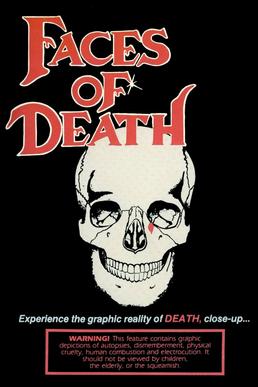
Modern descriptions of Great White Death have made the comparison directly, particularly in discussions of apparent recreated shark attacks. I looked for a direct production connection between the two films and couldn’t find one. The available credits indicate different writers, directors and producers, so the connection appears to be stylistic rather than a case of the same filmmakers creating both productions.
That similarity still makes sense. The mondo and death-film style thrived on giving viewers the feeling that they were seeing something forbidden, dangerous and perhaps a little too real. Genuine footage could be mixed with reconstruction and sensational narration without the clear lines audiences might expect from a modern documentary.
Sharks were almost perfect subjects for that treatment. The animals themselves were real, their tremendous predatory capabilities were real and fatal shark attacks were real. Add an ocean where almost everything happening beneath the surface was invisible to the audience, and filmmakers had the perfect environment for building fear.
Then Great White Death shows us a human skull.
The Tiger Shark and the Skull
As noted earlier, during the South African shark-netting sequence, the film shows what its narration claims is the skull of a recently deceased human recovered from a large shark caught in the nets. Visually, the shark associated with the sequence appears to be a tiger shark, although the film’s narration doesn’t identify the species.
Tiger sharks certainly have the biology to make such a story plausible. They are large, tremendously powerful and opportunistic predators and scavengers capable of consuming an extraordinary variety of prey. Human remains being consumed by a large tiger shark is therefore not something that would be biologically impossible.
That doesn’t prove what Great White Death shows us.
I have not found reliable independent documentation identifying the person whose skull appears in the film, establishing all of the circumstances under which it was supposedly recovered or conclusively demonstrating that it came from the particular shark shown on screen. Considering the mondo-style presentation of the film and descriptions of some sequences as recreated, I think those questions are worth asking rather than simply repeating everything the movie says as fact.
At the same time, I haven’t found evidence proving the skull sequence was fabricated either. That’s an important distinction. More than four decades later, there simply isn’t enough documentation available for me to confidently tell you exactly what happened.
And somehow that makes the scene even stranger.
What Exactly Were We Watching?
That uncertainty runs through parts of Great White Death. There is unquestionably genuine wildlife footage in the movie, along with legitimate survivor testimony and real encounters with sharks. Modern descriptions of the production, however, have also characterized portions of its shark-attack imagery as recreations.
Rather than simply labeling the movie fake, I think it’s more interesting to view it within the filmmaking culture that produced it. Documentary footage, reenactments, shocking imagery and dramatic narration could all occupy the same production, particularly within the mondo tradition.
The human skull sequence represents that ambiguity better than anything else in the movie. Watching it as a kid, there was no reason for me to question it. A documentary told me a human skull had been recovered from a shark, showed me a skull and showed me a shark. That was enough.
Today I want to know more.
Was the skull actually recovered from that shark? Was it definitely a tiger shark? Was the sequence presented exactly as it happened, or was footage assembled to create a more dramatic narrative?
Those questions don’t make Great White Death less interesting to me. They make it considerably more interesting.
Then the Movie Starts Defending Sharks
This is where Great White Death takes a turn that people judging it solely by its title might never expect.
After spending much of the film emphasizing attacks, enormous jaws and the frightening capabilities of sharks, the narration begins questioning the idea that sharks are simply mindless killers. It says sharks aren’t indiscriminate killers and eventually discusses their importance to marine ecosystems, even referring to the shark as a “champion environmentalist of the sea.”
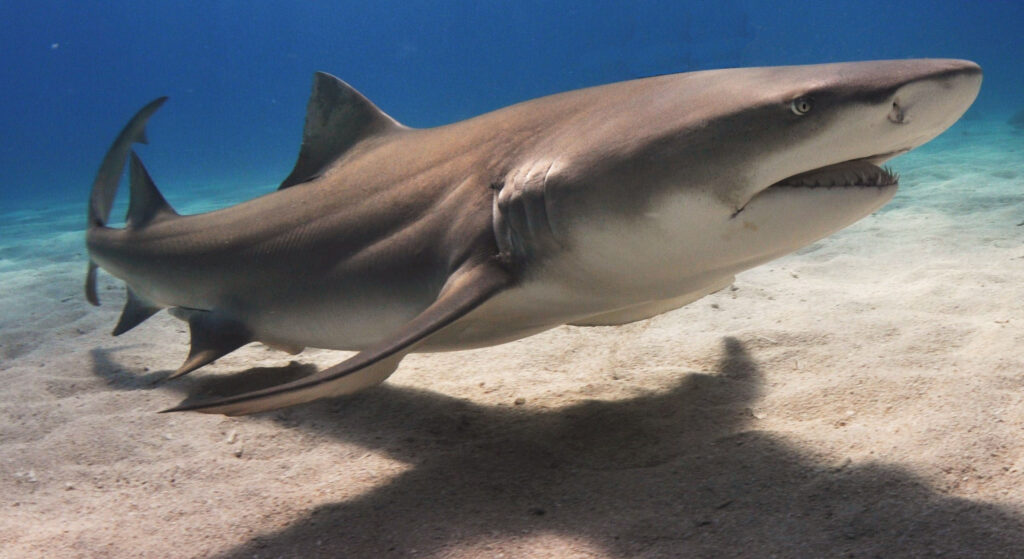
For a movie called Great White Death, that’s quite a twist.
The science of shark ecology has advanced tremendously since this film was made, and some of the movie’s individual claims haven’t aged particularly well. The larger concept, however, remains important: sharks have a place in marine ecosystems, and removing predators from those systems can have consequences.
That is a message I strongly support.
Through GulfGreatWhites.com and the Gulf Great White Shark Society, we advocate for shark conservation and for a greater understanding and appreciation of sharks, particularly the great whites and other large species inhabiting the Gulf of Mexico. That doesn’t mean pretending these animals are something they’re not. I believe conservation works best when we’re honest about wildlife, and honesty means acknowledging both the ecological importance of sharks and the potential danger posed by some large species.
Great whites can be dangerous. Tiger sharks can be dangerous. Bull sharks can be dangerous. Those facts do not make them evil, and they do not mean our oceans would be better without them.
Conservation Doesn’t Mean Making Sharks Cuddly
I think that’s an important distinction because conservation messaging can sometimes overcorrect the sensationalism of the past. For decades, sharks were depicted as almost supernatural killing machines, so there is an understandable desire to push back against that image. But we don’t need to replace one exaggeration with another.
Sharks don’t have to become harmless sea puppies for us to conserve them.
A grizzly bear can be ecologically important and potentially deadly. A mountain lion can be magnificent wildlife and capable of attacking a person. A large alligator can deserve protection while possessing enough power to kill a human being. Sharks should be allowed the same complexity.
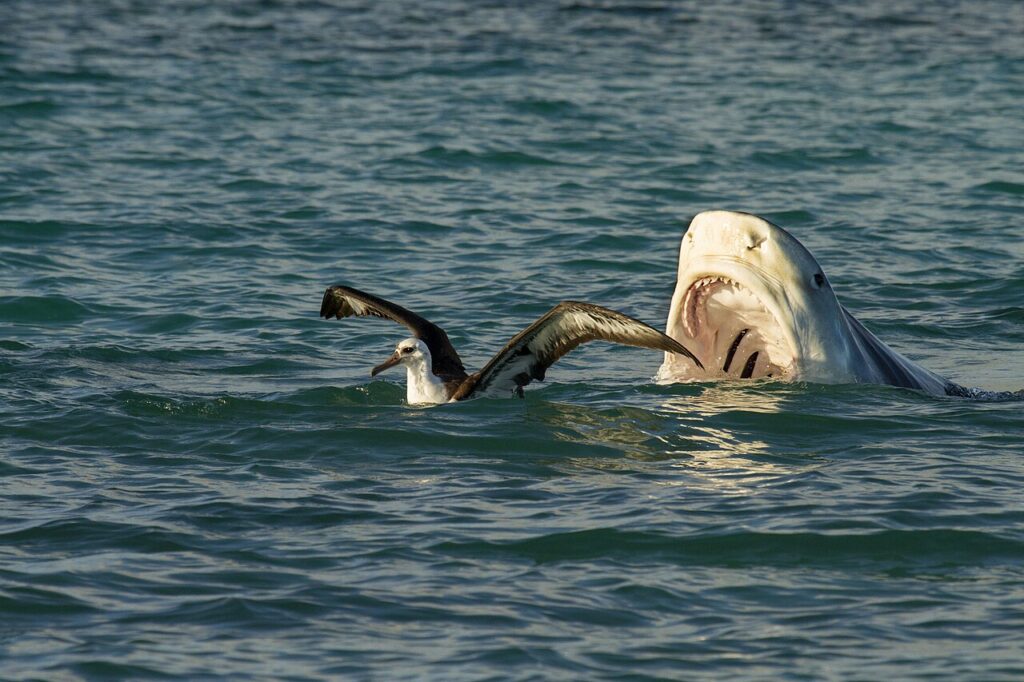
In fact, that’s part of what makes them fascinating to me. There are still animals on this planet capable of reminding us that human beings aren’t physically dominant everywhere we go. Enter the ocean and we become visitors in an environment where animals are better equipped to survive than we are.
Respecting that reality isn’t anti-shark. I would argue it’s one of the purest forms of shark appreciation.
The World We Have Been Given
There is another element of Great White Death that hits me differently today. During its discussion of environmental damage, the film turns the criticism toward humanity and talks about our responsibility for the world we have been given.
That idea resonates strongly with my approach to conservation.
Stewardship isn’t limited to animals we find cute, useful or safe. The natural world contains predators, venomous animals and creatures powerful enough to kill us. They are still part of creation, and their existence isn’t somehow less valuable because they make us uncomfortable.
Sharks have survived in Earth’s oceans for hundreds of millions of years. Long before there were beach resorts, surfboards, fishing boats or humans swimming beyond the breakers, sharks were part of these ecosystems.
We are the newcomers.
From Horror Icons to Sharks We Can Follow
One of the biggest differences between the world of Great White Death and ours is our ability to follow sharks in ways that would have seemed almost impossible when the movie was released. Satellite and acoustic tagging have allowed researchers to document individual animals moving tremendous distances, while the public can sometimes follow the journeys of particular great whites.
That has helped change the way people relate to sharks. Instead of an anonymous fin suddenly appearing beside a boat, a great white can become an individual animal with a documented movement history. We can see it travel through huge stretches of ocean, including the Gulf of Mexico, and begin to appreciate the scale of its life.
None of that makes the shark less powerful or potentially dangerous. It simply gives us a better picture of what the animal actually does when it isn’t starring in our nightmares.
That may be one of the greatest changes since I first saw Great White Death as a kid. We haven’t discovered that the great white was harmless all along. We’ve discovered that it is far more interesting than the monster we created.
The Image I Never Forgot
And yet, after everything else in the movie, I keep coming back to that tiger shark and the skull.
Maybe it’s because that scene perfectly captures the strange intersection where Dark Outdoors lives: wildlife, danger, death and unanswered questions. The natural world is capable of producing things every bit as disturbing as fiction, while human storytelling has always had a way of making those realities even darker.
Great White Death gave audiences both.
It gave us legitimate shark footage and survivor testimony alongside sensational narration and material that has generated questions about reconstruction. It gave us blood, attacks and what it claimed was a human skull recovered from a shark, yet somehow the same movie ultimately asked viewers to reconsider whether sharks deserved the monster label at all.
Check out our latest shark PSA with horror icon Brinke Stevens.
Near the end, Great White Death argues that sharks are necessary to the sea and reminds viewers that humans entering the ocean are entering an environment sharks inhabited millions of years before us.
More than 40 years later, that’s the part of the movie I appreciate most. At GulfGreatWhite.com, we advocate for shark conservation because these animals deserve to remain part of healthy oceans for generations to come. We can do that while respecting attack victims, acknowledging legitimate danger and refusing to pretend that large sharks are anything other than powerful wild predators.
Great White Death knew how to sell fear. The title alone tells you that. But buried underneath the mondo-film shock, the attacks, the ominous voice of Glenn Ford and that unforgettable image of an alleged human skull recovered from a shark was an idea that has aged considerably better than some of the film’s science.
The ocean needs sharks.
For Dark Outdoors, I can’t think of a more appropriate lesson. The natural world contains things capable of hurting us and, in rare circumstances, killing us. Respecting that darkness doesn’t mean we have to destroy it.
It means understanding why it’s worth protecting.
Chester Moore
Follow Chester Moore and Higher Calling Wildlife® on the following social media platforms
@gulfgreatwhitesharksociety on Instagram
@thechestermoore on Instagram
Higher Calling Wildlife on Facebook
Email Chester at chester@chestermoore.com.
Subscribe to the Dark Outdoors podcast on all major podcasting platforms.