Category Archives: Animal Attacks

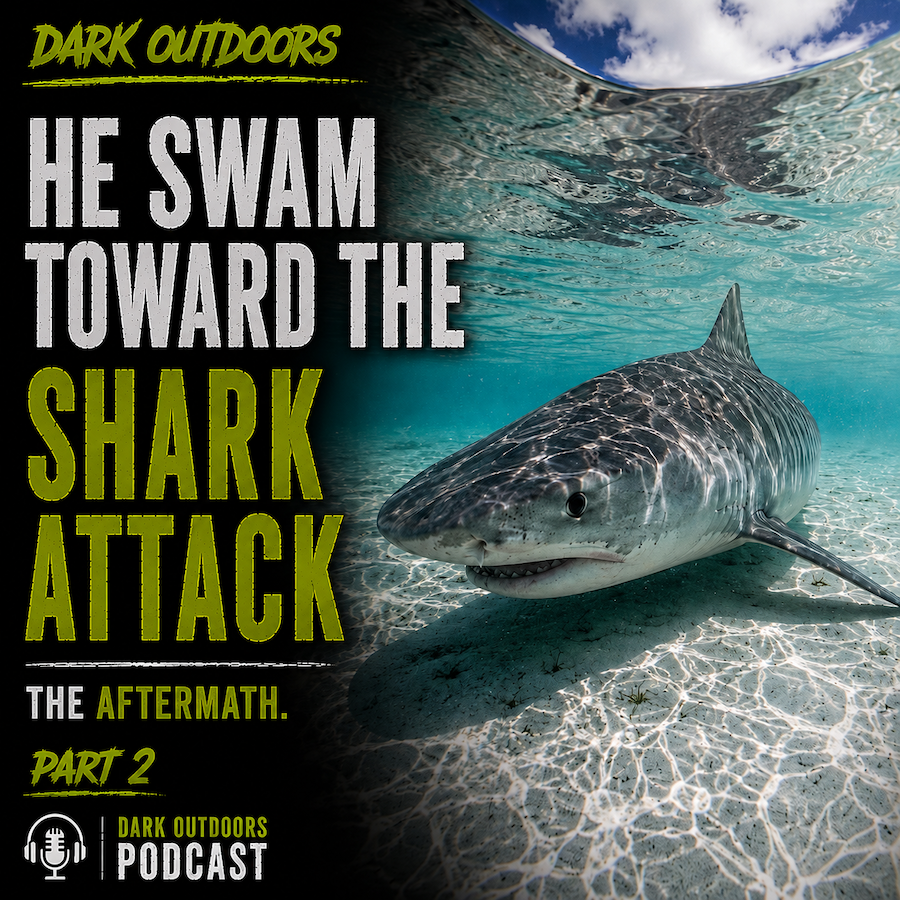
He Swam Toward The Shark Attack Part 2: The Aftermath

When a shark attack occuted in the clear waters of the Caribbean, chaos erupted on the beach. Most people stood frozen, unsure of what to do. Registered nurse Chris Carroll made a decision few people ever would—he swam straight toward the victim, knowing the shark could still be nearby.

That incredible act of courage was the focus of Part 1 of this special Dark Outdoors interview. In Part 2: The Aftermath, Chris sits down with Chester Moore to reflect on what happened after the rescue attempt and how those unforgettable moments changed his life forever.

This isn’t another sensationalized shark attack story. It’s a powerful conversation about courage, compassion, faith, and the choices that define us when we’re faced with extraordinary circumstances.

Chris shares the emotional toll of the experience, what he learned about shark attacks from witnessing one firsthand, and why he believes ordinary people are capable of extraordinary acts when they choose to put someone else’s life ahead of their own.

If you’ve ever wondered what drives someone to run—or swim—toward danger instead of away from it, this is an episode you won’t soon forget.

Listen Now

🎧 Apple Podcasts
https://podcasts.apple.com/us/podcast/he-swam-toward-the-shark-attack-part-2-the-aftermath/id1630809603?i=1000778793277

🎵 Spotify
https://open.spotify.com/episode/27mWtx3G29nIgTU7lFno3E?si=z0jQrN1GS_-bHU3i5WRiRw

🎙️ Listen on Apple, Spotify, iHeartRadio, Audible, and more
https://linktr.ee/darkoutdoorspodcast

Special Shark Week Book Offer

If this episode sparked your interest in sharks and the reality behind these incredible apex predators, now is a great time to pick up my new book:

Gulf Great White Sharks: Unveiling the Mystery of Apex Predators in the Forgotten Sea

For decades, many people believed great white sharks were little more than occasional visitors to the Gulf of Mexico. The evidence tells a very different story.

Drawing on years of research, interviews with leading shark scientists, historical accounts, and modern tracking data, this is the first book ever written entirely about great white sharks in the Gulf of Mexico. It explores their history, the latest discoveries about their movements, fascinating encounters with fishermen and divers, and why these magnificent predators are reclaiming their place in Gulf waters.

Whether you’re a lifelong shark enthusiast, an angler, a conservationist, or simply fascinated by wildlife mysteries, this book offers an evidence-based look at one of the ocean’s most misunderstood animals.

For a limited time during Shark Week you’ll receive:
  • A signed copy of the book
  • An exclusive Gulf Great White Shark Society decal
  • The special Shark Week sale price

How to Order

Send $17.95 via PayPal, Venmo or Cash App to:

Paypalhttps://www.paypal.com/paypalme/chestermoore

Venmo: https://account.venmo.com/u/lmoore526

Cash Apphttps://cash.app/$Moorefamily2310

Please include your mailing address in the notes and don’t forget to sign up to join the Gulf Great White Shark Society. It’s free and this offer is for members-only.

Click this link to learn more and join/subscribe.

Thank you for supporting Dark Outdoors and the Gulf Great White Shark Society. Every podcast listen, book purchase, and shared story helps us reach more people with evidence-based information about sharks, wildlife, conservation, and the incredible stories that unfold where people and the outdoors intersect.

Chester Moore

Follow Chester Moore on the following social media platforms

Chester Moore’s YouTube.

@thechestermoore on Instagram

@gulfgreatwhitesharksociety on Instagram

To support the efforts of Higher Calling Wildlife® click here.

Subscribe to the Dark Outdoors podcast on all major podcasting platforms.

Higher Calling Wildlife on Facebook

Email Chester at chester@chestermoore.com.
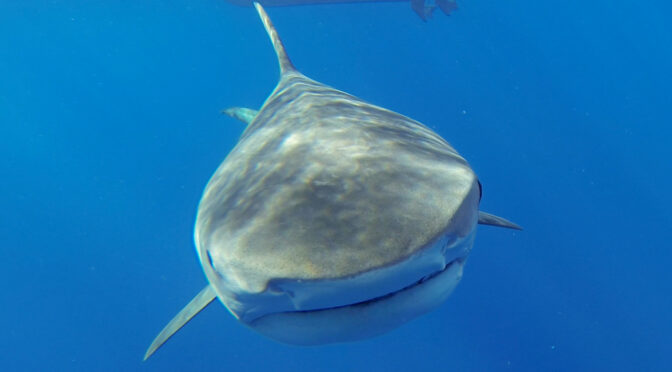
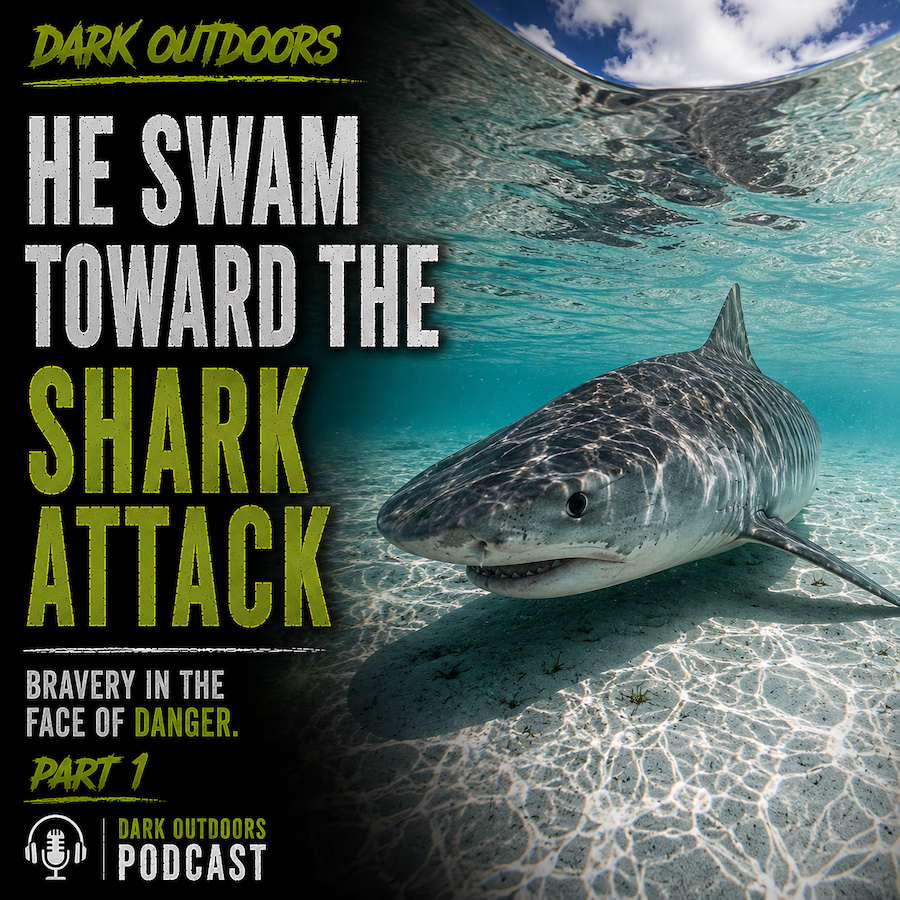
He Swam Toward The Shark Attack!

A woman is screaming in the water. People on shore don’t know what to do. Then one man makes a decision few ever would—he swims toward the danger.

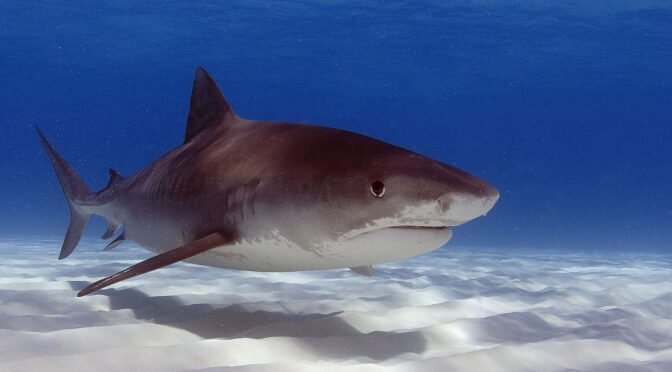
In this gripping first installment of a two-part Dark Outdoors interview, Chester Moore talks with registered nurse Chris Carroll, who found himself in the middle of a fatal tiger shark attack while vacationing in the Caribbean. What began as a relaxing day at the beach became a life-and-death emergency that tested his training, his instincts, and his courage.

Listen to the Full Interview

Apple Podcasts: Dark Outdoors on Apple Podcasts

Spotify: Dark Outdoors on Spotify

All podcast platforms: Dark Outdoors Linktree

Chris shares, in remarkable detail, the moment he realized he wasn’t responding to a drowning victim—but to someone who had just been attacked by a large shark. He recounts the terrifying swim, the rescue attempt, and the split-second decisions that unfolded in the water.

This is not a sensationalized shark attack story. It’s an honest conversation about courage, fear, and what drives someone to risk their own life to help another person.

In Part 1 you’ll hear:

  • Chris Carroll’s firsthand account of the attack and rescue attempt.
  • The moment he realized a shark was involved.
  • What was going through his mind as he swam toward the victim.
  • How his experience as a nurse prepared him for an unimaginable situation.
  • The lessons he learned from one of the most intense moments of his life.

If you’ve ever wondered how an ordinary person responds when confronted with extraordinary danger, this is an interview you won’t forget.

And if you’re a shark fan don’t forget to check out our episode of the Megalodon.

Listen to The Megalodon Mystery

Ready to investigate one of the ocean’s greatest mysteries? Listen to The Megalodon Mystery on your favorite podcast platform:

Chester Moore

Follow Chester Moore on the following social media platforms

Chester Moore’s YouTube.

@thechestermoore on Instagram

@gulfgreatwhitesharksociety on Instagram

To support the efforts of Higher Calling Wildlife® click here.

Subscribe to the Dark Outdoors podcast on all major podcasting platforms.

Higher Calling Wildlife on Facebook

Email Chester at chester@chestermoore.com.
Dog Attacks in the Outdoors: The Rise of Feral Dogs

The first thing I noticed was the Rottweiler.

I was scouting a spot along the Sabine River where I hoped to target bowfin, known to many Southeast Texas anglers as grinnel. The area looked promising. There was good access to the water, plenty of cover and all the ingredients that usually get a fisherman excited about coming back with a rod and reel.

Before I ever made it to the shoreline, though, I noticed movement near the edge of the woods.

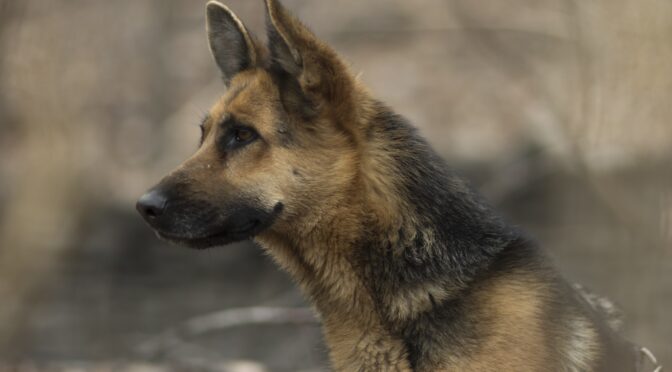
A large Rottweiler stepped into view. Then I spotted a German shepherd. A pit bull appeared a few seconds later, followed by what looked like a Labrador mix. The dogs were muddy and looked like they had been spending a lot of time outdoors. Whether they had been abandoned, wandered away from nearby homes or simply found their way there, I couldn’t say.

What I did know was that I wasn’t getting out of the truck.

After decades spent hunting, fishing and exploring wild places, I’ve learned to trust my instincts. Sometimes a situation doesn’t feel right, and there is no reason to ignore that feeling just to prove a point.

A week later I returned to the same location.

Two of the dogs were still there.

That bothered me more than the initial encounter because it suggested these weren’t simply pets passing through the area. At least some of them appeared to be living there.

As I drove away, I found myself thinking about a question most outdoorsmen never ask. What if a teenager had come there to fish alone? What if a family had stopped to explore the shoreline? What if someone walking a trail suddenly found themselves face-to-face with animals that no longer viewed people the way a household pet does?

Most people don’t think about dogs when they think about outdoor dangers. They think about alligators, snakes, sharks or wild hogs. Dogs occupy a different place in our minds because they are part of our lives. We hunt with them. Fish with them. Let them sleep in our homes.

Yet the numbers tell a different story.

According to the Texas Department of State Health Services, approximately 4.7 million dog bites occur annually in the United States. Hundreds of thousands of people require medical treatment each year, and children account for a significant percentage of the injuries. The Centers for Disease Control and Prevention has also documented a substantial increase in fatal dog attacks over the last decade.

Put another way, the average American is far more likely to be injured by a dog than by many of the animals that dominate outdoor safety discussions.

That reality became impossible to ignore last year when a man was killed while walking on a public trail near Katy, Texas. Authorities said multiple dogs attacked the victim during what should have been a routine walk. The incident shocked people because it happened in a place where families exercise, jog and spend time outdoors. It wasn’t some remote wilderness area. It was a public trail in a heavily populated part of Texas.

The attack made headlines for a few days before fading from public conversation, but it highlighted an issue that extends well beyond a single tragedy.

Dogs are among the most adaptable animals on earth. Their ability to live alongside people is one reason they have become one of the most successful species in human history. Unfortunately, that same adaptability allows them to survive when people abandon them.

And that is where the story becomes more complicated.

Over the years, I’ve interviewed wildlife biologists, game wardens, ranchers and hunters who all shared a common concern about feral dogs. While the public often focuses on coyotes, bobcats and other native predators, many wildlife professionals consider free-ranging dogs one of the most overlooked threats on the landscape.

Hunters frequently report seeing dogs chasing deer. Ranchers deal with attacks on calves, goats and other livestock. Along parts of the Gulf Coast, free-ranging dogs have been implicated in attacks on nesting birds and sea turtle nests. Trail cameras regularly capture images of dogs moving through remote areas where most people would never expect to find them.

Unlike coyotes, bobcats and other native predators, dogs did not evolve as part of North America’s natural ecosystems. When they become feral, they often behave in ways that disrupt wildlife populations and create conflicts that native predators typically do not.

Researchers studying free-ranging dogs around the world have linked them to impacts on hundreds of wildlife species. In some regions, they are considered one of the most significant invasive predators on the landscape.

The root of the problem is not the dogs themselves.

The root of the problem is human irresponsibility.

Dogs do not choose to be abandoned near parks, boat ramps, hunting leases, wildlife management areas or back roads. People make those decisions. Every year unwanted animals are left to fend for themselves, and while some are rescued or adopted, others learn how to survive on their own.

That survival can come at a cost.

A dog that spends months or years living without human supervision is no longer behaving like the family pet sleeping on a couch. It may become territorial. It may become increasingly wary of people. It may begin relying on scavenging or hunting to survive. When several dogs begin operating together, those changes can become even more pronounced.

That doesn’t mean every stray dog is dangerous.

Far from it.

Many abandoned animals are frightened, hungry and more likely to run away than confront a person. But one of the biggest mistakes outdoorsmen can make is assuming every unfamiliar dog will react like a pet.

Looking for a thriller that gets the details right? In Hammer, author Joe Betar drew on his real-world experience in conservation, anti-poaching, firearms, and tactical training to create a story that feels authentic instead of over-the-top. Learn more at https://joebetar.com or order Hammer on Amazon:

https://www.amazon.com/s?k=Joe+Betar+Hammer.

I’ve had two separate encounters with aggressive dogs while spending time outdoors. Neither resulted in injury, but both reinforced an important lesson. Situational awareness matters.

The decision to leave that Sabine River location wasn’t based on certainty that the dogs posed a threat. It was based on recognizing that I didn’t have enough information to know whether they did. There were plenty of other places to fish, and no bowfin was worth taking unnecessary risks.

That same mindset applies to outdoor safety in general.

If you encounter a group of unfamiliar dogs in a remote area, pay attention to their behavior. Create distance whenever possible. Avoid approaching them. Don’t attempt to feed them or interact with them. If the animals appear territorial or aggressive, leave the area and notify local authorities or animal control if possible.

Many outdoorsmen choose to carry personal protection while fishing, hunting, hiking or exploring remote locations. Depending on local laws and personal preference, that may include pepper spray, bear spray or a legally carried firearm. Whatever option you choose, understand how to use it safely and responsibly before you ever need it.

Check out this chilling episode from the Dark Outdoors® podcast archives. It tells the tale of terrifying feral dog encounters.

Subscribe to the podcast here on your favorite platforms through our Linktree.

Most importantly, trust your instincts.

I never did fish that particular spot along the Sabine River. Maybe those dogs eventually found homes. Maybe they belonged to someone nearby and simply liked roaming the area. Maybe they were completely harmless.

I’d like to think so.

What I know for certain is that the encounter reminded me that not every outdoor threat comes with scales, tusks or a fearsome reputation. Sometimes the most overlooked dangers are the ones we’ve become so familiar with that we stop seeing them for what they can be.

Most dogs will spend their lives being loyal companions, hunting partners and beloved members of the family. Unfortunately, when people abandon them and leave them to survive on their own, the consequences can affect wildlife, livestock and, in some cases, people.

That’s a reality worth remembering the next time you pull into a remote fishing spot and see something that doesn’t quite feel right.

Chester Moore

Follow Chester Moore on the following social media platforms

Chester Moore’s YouTube.

@thechestermoore on Instagram

@gulfgreatwhitesharksociety on Instagram

To support the efforts of Higher Calling Wildlife® click here.

Subscribe to the Dark Outdoors podcast on all major podcasting platforms.

Higher Calling Wildlife on Facebook

Email Chester at chester@chestermoore.com.

The Most Dangerous Shark? I Found Out The Experts Are Wrong

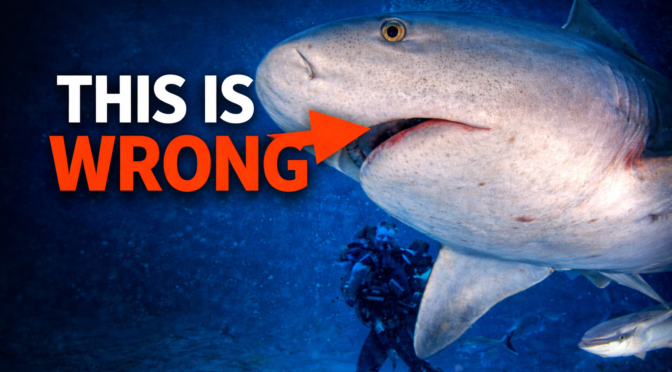
Bull sharks have a reputation as one of the most dangerous sharks in the world.

But what if they’ve been blamed for attacks they didn’t commit?

In this video, we take a closer look at shark attacks that were quickly labeled as “bull shark incidents” — and uncover the possibility that other shark species may have been responsible.

And some of them you have probably never heard of.

Watch my latest in-depth video on this topic here.

From mysterious encounters in murky waters to cases where identification was never confirmed, this story challenges what we think we know about shark behavior, risk, and responsibility.

Are bull sharks truly the main threat… or have they been unfairly blamed for many attacks?

Chester Moore

Follow Chester Moore on the following social media platforms

Chester Moore’s YouTube.

@thechestermoore on Instagram

@gulfgreatwhitesharksociety on Instagram

To support the efforts of Higher Calling Wildlife® click here.

Subscribe to the Dark Outdoors podcast on all major podcasting platforms.

Higher Calling Wildlife on Facebook

Email Chester at chester@chestermoore.com.