Chester Moore Files #3
The chupacabra began as a blood-draining monster in Puerto Rico. In Texas, it became something very different. After years of investigating strange canids—and actually retrieving one alleged chupacabra carcass—I believe science explains much of the mystery. But maybe not all of it.
By Chester Moore
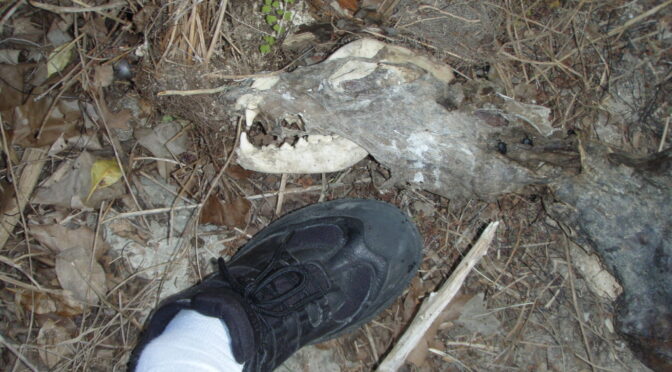
I have a chupacabra skull.
At least, that’s what most people would have called the animal it came from.
The skull has been in my possession for years, the remains of a bizarre, virtually hairless animal recovered after a flash flood. Its body had grayish, wrinkled skin, and its proportions looked strange enough to make anyone encountering it in the woods wonder exactly what they were looking at. I eventually went into the field and retrieved what remained of the carcass.

Do I believe I have the skull of some undiscovered bloodsucking monster?
No.
But that doesn’t make the story of the chupacabra any less fascinating.
In fact, the deeper I have gone into the subject, the more interesting it has become.
The chupacabra is unusual among famous cryptid stories because its modern legend isn’t particularly old. Reports exploded out of Puerto Rico during the 1990s, where witnesses described something very different from the hairless, four-legged creatures that would eventually become known as “chupacabras” in Texas. Early Puerto Rican reports described something far stranger, sometimes almost alien in appearance, associated with livestock allegedly drained of blood.
By the time the legend reached Texas, the monster had changed.
Listen: The Horror and Science of Chupacabra
I recently explored this strange intersection of wildlife, folklore and firsthand encounters on a special episode of my Dark Outdoors podcast, “The Horror and Science of Chupacabra.”
I get into the famous sightings, the Texas “blue dogs,” mange, coyotes, wolves and hybrids—and the strange skull that has been sitting in my possession for years.
The episode gets into something I’ve come to believe after years of looking at alleged chupacabra photographs and reports: a monster can be very real without being an unknown species.
When Mange Creates a Monster
Take a coyote and remove almost all its hair. Let disease and starvation reduce its body weight. Expose the ribs, exaggerate the appearance of the legs and ears and alter the texture and color of its skin.
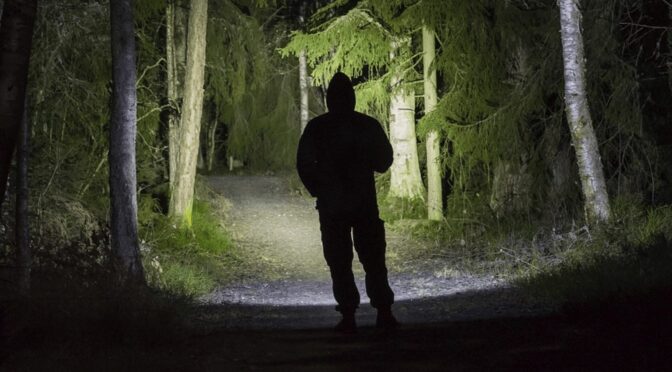
Now put that animal at the edge of someone’s property at 2 a.m.
Shine headlights on it.
Suddenly, one of North America’s most familiar predators doesn’t look familiar at all.
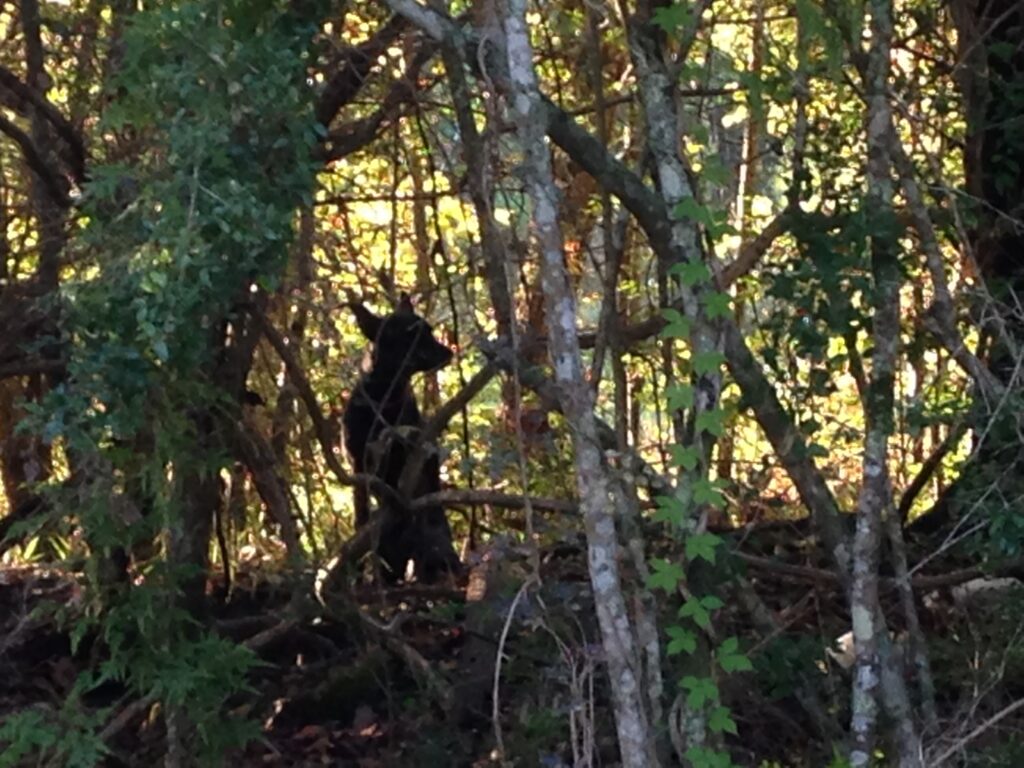
Severe mange can transform coyotes, foxes, raccoons and domestic dogs into animals that look shockingly different from healthy members of their species. Hair loss changes our perception of body proportions. Ears appear enormous. Legs seem unusually long and thin. Tails can become almost ratlike, while poor physical condition can produce a stumbling or unusual gait.
That’s important because the animal most commonly presented to me as a Texas chupacabra is a coyote.
Foxes can look even stranger. Their naturally prominent ears become exaggerated when most of their coat disappears, and their eyes can appear enormous when illuminated at night. Even raccoons can become almost unrecognizable after severe hair loss eliminates the familiar mask and bushy coat.
I’ve seen reports presented as mysterious creatures that were clearly animals we already know.
But I’ve also experienced firsthand how convincing the illusion can be.
The Night Something Charged Me
One night I was near a wooded area where I had been conducting red wolf research. I saw something moving low through the brush and initially couldn’t identify it. After I made a howl, the animal answered.
Then it came into view.
In the moonlight I could see an extremely skinny animal with large-looking ears. It circled, growled and eventually ran toward me, getting perhaps 10 or 15 yards away before retreating. When I finally got a good look at it, the mystery disappeared.
It was a domestic dog with an extreme case of mange. I estimated roughly 75 percent of its hair was gone.

But imagine someone else having exactly the same encounter.
You’re standing in the woods at night. Something nearly hairless emerges from the darkness, growls and charges you. You see huge ears, a gaunt body and exposed skin illuminated by your flashlight.
If you’ve heard the stories, you’ve just encountered a chupacabra.
That’s how legends can grow around real animals.
Then I Got a Call About a Body
My strangest connection to the chupacabra mystery began with my friend David Clever.
David encountered the body of an unusual animal following a massive flash flood. When he first saw it, the carcass was bloated and floating in a pool. When he returned later, much of the decomposition process had progressed, but the remains were still there.
He described an animal with no hair, grayish wrinkled skin and body proportions that appeared unusual. Eventually, David contacted me while I was doing research in the Texas Hill Country and asked if I wanted to retrieve what was left.
Of course I did.
I went out and recovered the remains.
And I still have the skull.
Looking at it now, I don’t believe I discovered an unknown species. My best assessment is that it belonged to a large coyote or a medium-to-large domestic dog, although the possibility of some degree of canid hybridization is interesting given the history of wolves and coyotes in the region. What I don’t believe is that hybridization itself explains the strange hairless appearance.
Mange does that very effectively.
The Strange Texas “Blue Dogs”
Texas added another layer to the chupacabra legend when strange hairless canids began attracting widespread attention.
These animals are sometimes called “blue dogs” because of their unusual gray-blue skin.
That appearance has helped fuel speculation that they represent an unknown canine, some unusual hybrid or perhaps the real identity of the chupacabra.
But research discussed in my podcast points toward a far less supernatural—and biologically fascinating—explanation.
Work cited in the transcript from researchers examining alleged chupacabra specimens identified animals including raccoons and domestic dogs. All suffered from mange, with extremely limited hair, thickened skin and a dry, wrinkled appearance. The discussion also noted secondary bacterial infection associated with heavily damaged skin and the unusual coloration observers sometimes report.
That combination can produce an animal that looks like it shouldn’t exist.
But it does.
What About Wolves and Coyotes?
There is another component of the Texas mystery that deserves attention: canid genetics.
Coyotes and wolves have a complicated genetic history in North America. Hybridization has occurred in different populations, and that can produce animals whose physical characteristics don’t always match the textbook image of a coyote or wolf.
That does not mean wolf-coyote hybridization creates chupacabras.
The transcript specifically addresses that misconception. Whatever genetic mixing may occur among canids, I don’t believe hybridization explains why these animals lose their hair and develop the bizarre appearance associated with Texas chupacabra reports.
Mange remains the far more compelling explanation.
But What About Puerto Rico?
This is where I hesitate to declare the entire chupacabra mystery solved.
The original Puerto Rican story isn’t identical to what developed later in Texas.
The very name chupacabra—”goat sucker”—grew out of reports involving livestock allegedly attacked and drained of blood. The legend exploded during the 1990s, but accounts of mysterious livestock deaths and supposed blood-draining creatures in Puerto Rico preceded the famous chupacabra wave.
Descriptions also evolved dramatically.
The original creature of Puerto Rican folklore could be portrayed as something almost alien. The Texas version became a strange hairless canine.
Those may be two very different phenomena that acquired the same name.
That’s why I’m willing to say I think I know what most Texas chupacabras are without pretending I’ve explained every unusual report ever associated with the name.
The Chupacabra Is Real—Just Not the Way You Think
My position on the chupacabra might sound contradictory.
I think the chupacabra is real.
I just don’t think most of the animals being photographed, filmed and found dead in Texas represent an unknown species.
They’re real animals suffering from real conditions that can transform them into something almost unrecognizable. In many cases we’re probably looking at coyotes, foxes, raccoons or domestic dogs suffering from severe mange. That’s also the conclusion I reached about the mysterious skull in my possession.
But knowing that doesn’t make encountering one at night any less unsettling.
I’ve had one charge me.
I’ve retrieved the carcass of another.
And I have its skull.
Sometimes the most frightening creatures in the woods aren’t monsters at all.
They’re familiar animals that, for one reason or another, no longer look familiar.
Hear the complete investigation and my firsthand stories in “The Horror and Science of Chupacabra” on Dark Outdoors.
Dark Outdoors investigates terrifying encounters, unsolved mysteries, true crime and dangerous wildlife—because the outdoors has a dark side.
Follow Chester Moore on the following social media platforms
@gulfgreatwhitesharksociety on Instagram
To support the efforts of Higher Calling Wildlife® click here.
Subscribe to the Dark Outdoors podcast on all major podcasting platforms.
Higher Calling Wildlife on Facebook
Email Chester at chester@chestermoore.com.
: