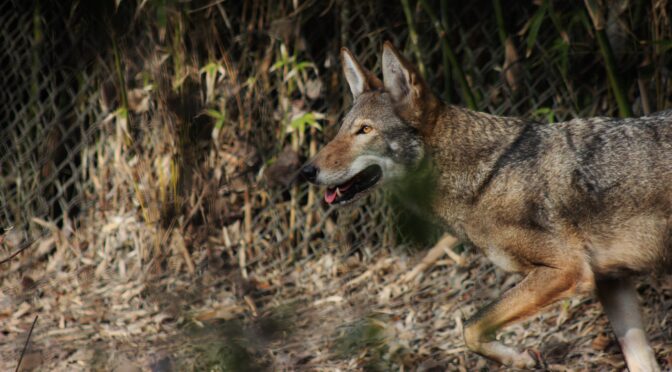
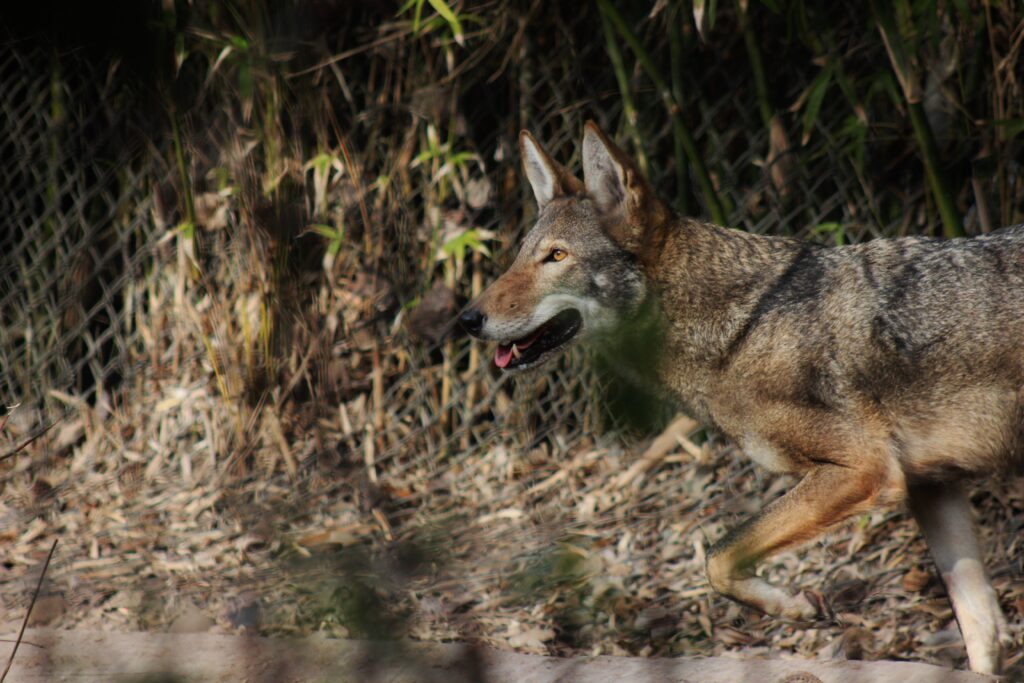
A pair of eyes emerged from the bushes in the darkness. There had recently been a mountain lion sighting in the area, so I raised my rifle and looked through the scope. What I saw wasn’t a mountain lion. It looked like a red wolf.
I lowered the rifle.
That encounter has stayed with me for years, and it opens a new episode of Dark Outdoors®, “The Night I Had a Red Wolf in My Crosshairs.” The episode explores that experience, other strange wild canine encounters and the fascinating story of an animal that once roamed Texas and Louisiana but came perilously close to disappearing forever.
There is another fascinating chapter to this story.
Researchers studying wild canines along the Texas Gulf Coast have discovered animals carrying significant amounts of red wolf ancestry. That raises intriguing questions about whether genetic remnants of the wolves that once inhabited this region have survived within coastal coyote populations.
I explored that story in a video examining Texas coyotes, red wolf genetics and the remarkable possibilities scientists are considering for conserving those genes.
The red wolf (Canis rufus) is one of North America’s great wildlife conservation stories.
Red wolves once occupied portions of the eastern and south-central United States, including Texas and Louisiana. By the 20th century, persecution, habitat changes and hybridization with coyotes helped push them toward extinction in the wild.
A small number of animals were captured along the Texas-Louisiana Gulf Coast to establish a captive breeding program. Those animals became the foundation for an effort that prevented the red wolf from disappearing completely.
Today, the only recognized wild population exists in eastern North Carolina.
That makes the discovery of red wolf ancestry in Gulf Coast canines especially fascinating. The wolves themselves may have disappeared from Texas, but some of their genetics apparently did not.
What Was in My Crosshairs?
I’m not claiming that the animal I encountered that night was a genetically pure red wolf.
There was no DNA test. I didn’t capture it. I didn’t have a biologist standing beside me.
I can only tell you what happened.
I saw those eyes emerge from the bushes. With a mountain lion recently reported in the area, I raised my rifle. When I got a better look at the animal, what I saw looked like a red wolf.
So I lowered the gun.
Years later, as research began revealing the surprising amount of red wolf ancestry surviving in some Gulf Coast coyotes, encounters like mine became even more interesting.
Could I have encountered an animal carrying substantial red wolf genetics?
I don’t know.
But unlike a lot of mysterious wildlife stories, we now know there really are wild canines along the Texas Gulf Coast carrying genetic echoes of the red wolf.
And that makes this story worth another look.
Hear the Full Story
In the complete Dark Outdoors episode, I tell the story of that night and explore other unusual encounters I’ve had with wild canines over the years.
Listen to “The Night I Had a Red Wolf in My Crosshairs”:
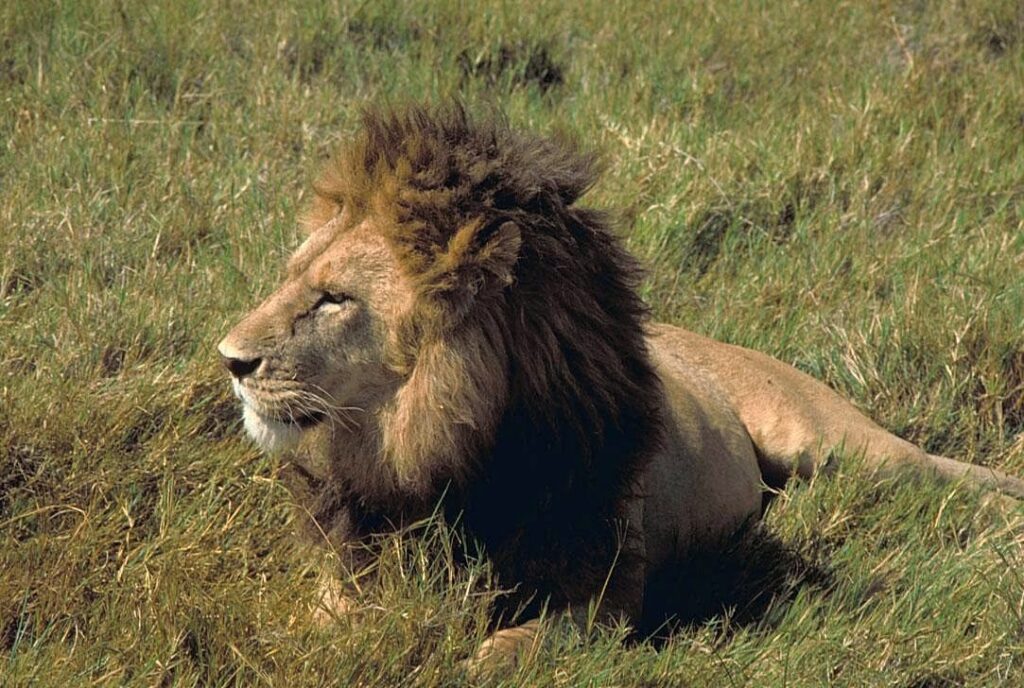
A man walked outside his Texas home and discovered a huge cat inside his chicken coop. It wasn’t a bobcat, and it didn’t look like a mountain lion. The animal he described looked like an African lion.
That encounter is at the center of a new episode of Dark Outdoors®, examining one of the strangest categories of wildlife reports I have investigated over the years: big cats that don’t seem to belong where people are seeing them.
For decades, I have investigated reports of unusual cats in Texas and across the South. Mountain lions are responsible for some of them. Bobcats, especially when seen briefly or under unusual conditions, can account for others. Misidentification is a legitimate part of investigating any unusual wildlife report, and it should always be considered before looking for a more exotic explanation.
But occasionally a report comes along that doesn’t fit comfortably into those categories. The chicken-coop encounter is one of them. The witness described an animal that appeared to be an African lion. That’s an extraordinary claim, and without photographs, DNA or other physical evidence, there is no way to prove exactly what stood inside that coop.
The possibility of an exotic cat appearing in Texas, however, isn’t as impossible as it might initially sound. Texas has a long history of privately held exotic wildlife. Animals escape, and historically some have been deliberately released. In some cases, an exotic animal could potentially survive unnoticed for a period of time, particularly in remote country with abundant cover and prey.
That doesn’t mean every report of an unusual cat is an escaped exotic. It simply means the possibility shouldn’t automatically be dismissed when examining a credible report.
The Giant Tracks
The lion report isn’t the only strange big-cat case I discuss in this episode. I also recount one of my own investigations involving enormous cat tracks that immediately caught my attention because of their size.
Photo by Chester Moore
I’ve spent much of my life around wildlife and studying animal sign, and these tracks appeared far larger than what I expected to find from a native cat in that area. That doesn’t automatically make them evidence of some exotic predator. Tracks can be deceptive. Mud can distort a print, a paw can slip and multiple impressions can overlap.
Those possibilities always have to be considered, but when unusually large tracks begin showing up in the same broader conversation as reports of unusually large cats, the subject becomes much more interesting.
Could Exotic Cats Be Roaming Texas?
Texas is enormous, with millions of acres of forests, swamps, brush country, ranchland and river bottoms where an animal can remain surprisingly difficult to detect. Mountain lions themselves demonstrate how effectively a large predator can move primarily at night, avoid people and cover tremendous distances without being seen by most of the people living around it.
Now consider an escaped exotic cat behaving in much the same way. Could a lion, leopard or another large captive cat survive for some period of time in the wild? Under the right circumstances, it’s certainly possible. The much harder question is whether that possibility explains any particular sighting.
That’s where evidence matters. A witness report can begin an investigation, but tracks, photographs, video, hair, scat or DNA can move a case into an entirely different category.
But unfortunately A.I. has changed this to a large extent because it’s very difficult to believe any photo or video evidence.
The Mystery Cats of the South
Stories of strange cats have circulated through Texas, Louisiana and other parts of the South for generations. Some witnesses report oversized mountain lions. Others describe black cats they call panthers. Still others report animals whose size, coloration or physical appearance doesn’t seem to match any native species.
There is a temptation to put every one of those reports into the same box, but I don’t think that’s useful. Some are undoubtedly misidentifications. Some may involve actual mountain lions appearing in places where people aren’t accustomed to seeing them. Other reports simply don’t contain enough information to reach any conclusion.
Then there are the cases that remain difficult to explain. Those are the ones that have kept me interested in this subject for decades.
Something That Isn’t Supposed to Be There
The goal isn’t to turn every strange animal sighting into a monster story. It’s to investigate what people report and ask the right questions. What did the witness actually see? Does the description match known wildlife? Could an exotic animal have escaped in the area? Are there tracks, photographs, hair, scat or other physical evidence? Have independent witnesses reported something similar?
Those questions are far more interesting than simply declaring every unusual sighting impossible or, on the other extreme, believing every extraordinary claim without evidence. Most wildlife mysteries probably have ordinary explanations.
But every once in a while, somebody walks outside, looks into a chicken coop and sees something that isn’t supposed to be there.
That’s when things get interesting.
Chester Moore
Follow Chester Moore on the following social media platforms
Deep along the Brazos River, something attacked a calf in the darkness.
The people nearby couldn’t clearly see what was happening.
But they could hear it.
They described multiple animals involved in the attack and, most disturbingly, what sounded like bones breaking as the calf was seemingly pulled apart with astonishing speed.
What happened that night?
I don’t know—and I’m not going to pretend that I do.
In the new Dark Outdoors® episode, “They Could Hear Them Tearing the Calf Apart,” you can hear the account directly from one of the people who was there. The earwitness tells his own story, describing what he heard along the Brazos River that night and why the experience has stayed with him.
The Brazos River runs through some wild Texas country, and there are certainly predators capable of attacking young livestock.
Coyotes immediately come to mind, particularly when multiple animals are described. Bobcats occur throughout Texas, mountain lions are present in parts of the state and feral hogs can attack vulnerable animals and readily scavenge carcasses.
But identifying what could kill something is very different from determining what did.
That’s important here. This was an event experienced primarily through sound, in darkness, during what was apparently a violent and chaotic attack.
We make no assumptions about what was responsible.
What makes the story compelling is the extraordinary nature of what the earwitness describes hearing and how quickly the attack seemed to unfold. In the podcast, you aren’t simply hearing my interpretation of his story. You hear him describe the encounter in his own words.
Strange Things Happen in Predator Country
I’ve spent decades observing wildlife, and I’ve encountered strange examples of predation myself.
Sometimes you find evidence that seems straightforward. Other times you look at tracks, wounds, feeding patterns or the condition of an animal and something doesn’t fit what you expected.
That doesn’t mean a monster did it.
It means you don’t know.
Wild animals don’t always behave according to the simplified descriptions we give them. Predators exploit unusual opportunities, multiple species may visit the same carcass and scavengers can dramatically change a scene after an animal dies.
I’ve seen strange predation in the wild where I couldn’t confidently explain exactly what happened. Experiences like those are one reason I take accounts like this seriously without making extraordinary claims about them.
Hearing Can Be Worse Than Seeing
Anyone who has spent significant time outdoors after dark knows how powerful sound becomes when you can’t see its source. Your mind tries to construct an image from what your ears are telling you.
Now imagine hearing an animal fighting for its life somewhere beyond your ability to see clearly.
Nature isn’t a horror movie. Predators aren’t evil. They kill because that’s how they survive, and predator-prey relationships are fundamental to the natural world.
But that doesn’t make hearing a violent kill in the darkness any less unsettling.
In the full episode, the Brazos River earwitness describes exactly what he remembers hearing. I also examine some of the possibilities and share other unusual predator-prey observations that have left me with questions of my own.
We make no assumptions about what happened along the Brazos River that night. We simply present the account, consider what we know about predators and let the person who experienced it tell you what he heard.
Sometimes there isn’t enough evidence to explain everything that happens in the wild.
And sometimes hearing it is worse than seeing it.
Because the outdoors has a dark side.
Chester Moore
Follow Chester Moore on the following social media platforms
Reports of black panthers have circulated through Texas for generations. From the Pineywoods to South Texas, people have described large, long-tailed black cats crossing roads, slipping through creek bottoms and appearing in places where conventional wildlife wisdom says they shouldn’t exist.
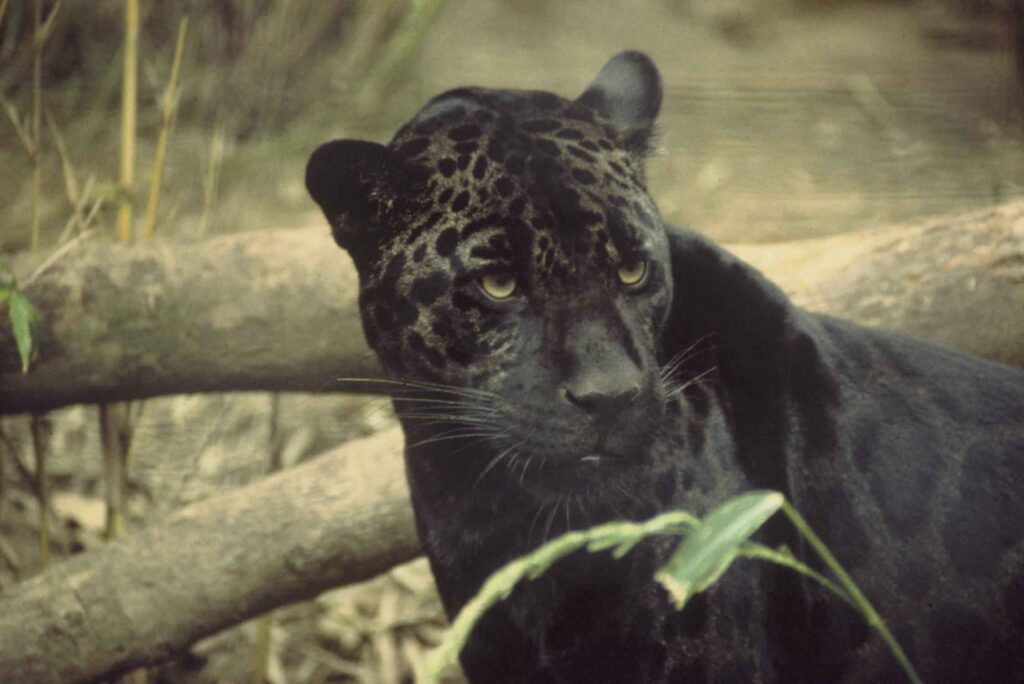
Most of these encounters leave little behind beyond a story. But occasionally a report comes from an experienced outdoorsman who gets a good enough look at the animal to make the account difficult to casually dismiss. My friend David Cleaver had one of those encounters, and what he describes sounds remarkably like one of the most impressive cats on Earth—a black jaguar.
Hear David’s complete firsthand account on the new Dark Outdoors® episode “Black Ghost: A Texas Jaguar Encounter” on Apple Podcasts or Spotify.
David is a dedicated outdoorsman and hiker, and I consider him a highly reliable witness. His encounter wasn’t simply a fleeting glimpse of something dark disappearing into the brush. He describes a large black feline whose size, build and overall appearance didn’t match the animals normally encountered in Texas.
The possibility of a jaguar deserves consideration because jaguars aren’t strangers to Texas. They are part of our natural history and once occurred in the state. Texas Parks and Wildlife Department information lists the jaguar as endangered and considers it possibly extirpated in Texas, while acknowledging the possibility of a rare wandering animal arriving from Mexico.
That is a long way from saying jaguars are secretly breeding somewhere in Texas. There is no evidence of that. But an individual jaguar wandering into the state is biologically possible, and jaguars have continued to appear north of Mexico in the American Southwest.
But What About a Black Jaguar?
This is where David’s encounter becomes especially mysterious.
Black jaguars are real. Melanism can produce jaguars that appear almost completely black, although their characteristic rosette pattern can often still be seen under the right lighting.
There is a significant problem, however, with putting one in Texas. The U.S. Fish and Wildlife Service reports that melanistic jaguars have never been documented north of Mexico’s Isthmus of Tehuantepec. A black jaguar appearing in Texas would therefore be an extraordinary occurrence requiring extraordinary evidence.
So what are people seeing when they report black panthers in Texas?
There probably isn’t a single answer. Some sightings undoubtedly involve domestic cats, dogs, otters or other animals seen under poor conditions. Mountain lions can also appear extremely dark in certain light, although there is no scientifically documented population of truly black mountain lions.
But that doesn’t mean every report should automatically be discarded.
I’ve investigated unusual wildlife reports for years, and I’ve learned that the important questions are often simple ones: Who saw the animal? How close were they? How long did they see it? What characteristics could they clearly identify? And how experienced is the witness with wildlife?
David Cleaver’s encounter deserves to be considered in that light.
I can’t tell you that David saw a black jaguar. There is no photograph, DNA or other physical evidence that could prove what the animal was. But knowing David and hearing the details of his encounter, I believe he saw something extraordinary.
And considering that jaguars once roamed Texas, the possibility of an occasional big cat appearing where we least expect it is a mystery worth investigating.
I can’t tell you that David saw a black jaguar. There is no photograph, DNA or other physical evidence that could prove what the animal was. But knowing David and hearing the details of his encounter, I believe he saw something extraordinary.
Jaguars once roamed Texas. Whether one of their darkest forms could ever return is another question entirely.
For now, the black ghost remains just that—a mystery.
Chester Moore
Follow Chester Moore on the following social media platforms
Every Shark Week, one question seems to rise to the surface almost as predictably as the television specials themselves:
Could the megalodon still be alive?
It’s a fascinating question, and one I’ve been asked countless times over the years.
Let me answer it right away.
Personally, I don’t believe megalodon is still swimming our oceans. The scientific evidence strongly supports the conclusion that this prehistoric giant disappeared a long time ago.
Illustration by Bill Rebsamen.
But that doesn’t mean the mystery ends there.
For more than a century, experienced fishermen, sailors, explorers, and divers have reported seeing sharks so enormous they seemed almost beyond belief. These weren’t always sensationalists looking for attention. Many were seasoned outdoorsmen and mariners who knew the sea as well as anyone.
If they weren’t seeing a living megalodon…
What were they seeing?
That’s the question I investigate in the latest episode of my Dark Outdoors® podcast.
Listen to This Episode of Dark Outdoors
Ready to investigate one of the ocean’s greatest mysteries? Listen on your favorite platform below:
Rather than trying to prove the impossible, this episode takes an investigative look at some of the world’s most famous giant shark reports and compares them with what we know through modern marine science. Along the way, we separate documented history from maritime folklore while exploring why stories of enormous sharks continue to capture our imagination.
Among the accounts examined is legendary outdoorsman and author Zane Grey’s remarkable shark encounter in the South Pacific, mysterious reports of giant sharks from Australian waters, and the enduring legend of Baja California’s so-called “Black Demon.” These stories have become part of maritime history, but they also raise legitimate questions about how eyewitnesses perceive extraordinary events on the open ocean.
The episode also explores something equally fascinating—the remarkable reality of sharks that actually exist.
Great white sharks can reach astonishing proportions. Legendary charter captain Frank Mundus became famous for catching some of the largest great whites ever documented, helping shape public perception of these incredible predators. More recently, Deep Blue, believed to be among the largest reliably documented great white sharks ever recorded, reminded the world just how immense these animals can become.
We also examine whale sharks, basking sharks, and the megamouth shark—species whose sheer size can leave even experienced observers stunned under the right conditions.
Having spent years researching great white sharks, interviewing leading shark scientists, documenting Gulf records, and diving with these magnificent predators, I’ve learned something important.
Reality is often every bit as fascinating as legend.
Sometimes more so.
One of the goals of Dark Outdoors has always been to investigate mysteries without abandoning science. It’s possible to appreciate compelling eyewitness accounts while also recognizing that extraordinary claims require extraordinary evidence. That’s especially true when discussing an animal as iconic as the megalodon.
This episode doesn’t argue that megalodon somehow escaped extinction.
Instead, it explores why reports of giant sharks continue to emerge from around the world and examines the very real animals that may explain at least some of those extraordinary encounters.
Whether you’re fascinated by sharks, cryptozoology, maritime history, or simply enjoy thoughtful investigations into the unexplained, I think you’ll find this episode an entertaining journey into one of the ocean’s greatest legends.
As Shark Week approaches to shine a spotlight on sharks from around the globe, it’s a perfect time to remember that while the megalodon almost certainly belongs to the distant past, our oceans are still home to giants capable of inspiring wonder, respect, and perhaps just a little bit of mystery.
Chester Moore
Follow Chester Moore on the following social media platforms
For decades, people across the United States have reported something that science insists shouldn’t exist:
A jet-black mountain lion.
Not a bobcat. Not a house cat. Not a trick of the light.
A full-sized cougar — moving silently through the timber… darker than the night around it.
Watch my new video on the topic here.
These sightings have persisted for generations, from the Smoky Mountains to Texas ranchland, from Appalachian hollows to Western canyon country.
And the question remains:
Are black mountain lions real… or is this one of America’s most enduring wildlife legends?
The “Black Cougar” That Science Says Doesn’t Exist
Mountain lions — also called cougars, pumas, or panthers depending on where you live — are one of the most widespread predators in the Western Hemisphere.
But here’s the strange part:
Despite thousands of confirmed mountain lions documented across North America…
Science has never confirmed a truly melanistic (black) mountain lion.
No verified specimen. No confirmed genetic line. No clear photograph. Not even one born in captivity.
And yet…
People keep seeing them.
Eyewitness Reports That Refuse to Go Away
Black mountain lion sightings aren’t rare.
They appear in:
Trail camera rumors
Local police reports
Hunters’ encounters
Rural folklore
Newspaper archives going back over a century
Some witnesses describe an animal so dark it looked like a shadow moving through the forest.
Others report yellow eyes in the brush… and a long tail disappearing into the trees.
Many of these people have spent their entire lives outdoors.
They know what a bear looks like. They know what a dog looks like. They know what a mountain lion looks like.
So why does this mystery persist?
Absence of evidence is not always evidence of absence.
New Video: Black Mountain Lions in America
In my latest documentary, I break down:
The history of black cougar reports
Why science rejects the claim
What witnesses are actually seeing
The genetics behind melanism
And why this mystery refuses to die
🎥 Watch it here:
Black Mountain Lions in America: The Mystery That Won’t Die (embed the video here)
What Do You Think?
Have you ever seen something in the woods that didn’t make sense?
Do you believe black mountain lions could exist…
Or is this legend the result of fear, darkness, and misidentification?
Let me know in the comments.
And as always…
Stay sharp out there.
Because the wilderness is stranger than we admit.
Chester Moore
Follow Chester Moore on the following social media platforms
Thick white fur. A heavy, rounded body. A shape that doesn’t belong in Southern pine woods. In a single trail camera frame, it looks less like a feral hog and more like something out of place, almost unreal.
Raul Alcocer sent me this photo and I showed it to a hog hunter-trapper and he called it a “polar bear hog.”
But behind the humor is a more uncomfortable truth. This animal is real, and its existence points back to human decisions that continue to reshape the wild in unpredictable ways.
The photo shows a massive white, woolly hog moving through a forest clearing. It doesn’t resemble the lean, dark feral hogs most hunters know. The coat is thick. The body is heavy. The overall look is startling enough that experienced outdoorsmen questioned what they were seeing.
As the image circulated, similar stories followed. Reports of giant white hogs, unusually thick-coated pigs, and animals that didn’t match modern expectations of wild hogs at all began coming in from across the South.
This isn’t a mystery species. It’s the long shadow of escaped and released domestic animals.
For generations, pigs were imported, bred, traded, abandoned, and sometimes intentionally released. Some were heritage breeds with thick coats and heavy builds. Others escaped farms or were turned loose when they became difficult to manage. Once those animals entered the wild, there was no undoing it.
Their genetics didn’t disappear. They spread.
Over time, those traits mixed into feral populations, resurfacing decades later in animals like this one. The result can be hogs that look nothing like what people expect, even though they are entirely real.
Feral hogs are already one of the most destructive invasive species in North America. They damage crops, destroy habitat, spread disease, and alter ecosystems. Adding unpredictable genetics into the mix only compounds the problem.
Large, heavy-bodied hogs with thick coats may survive colder conditions better, range farther, and compete more aggressively with native wildlife. What began as a domestic decision, a release, an escape, or a failure to contain, becomes a long-term ecological problem.
This isn’t ancient history. It’s still happening.
The “polar bear hog” isn’t a myth or a monster. It’s a reminder. The outdoors carries the consequences of human actions long after people walk away. Animals released into the wild don’t disappear. They adapt, survive, and sometimes come back in forms no one expects.
What looks strange on a trail camera today can become a serious problem tomorrow.
I break down the image, the genetics behind woolly feral hogs, and how escaped and released animals continue to shape the wild in the full video investigation below.
If you’ve encountered unusually large, white, or thick-coated feral hogs, or have firsthand experience with animals escaping or being released, those observations matter. The outdoors is keeping score, whether we acknowledge it or not.
The first time my friend and filmmaker Paul Fuzinski and I went into the Everglades and Big Cypress Swamp to investigate reports linked to the Skunk Ape, we approached it as a field problem, not a folklore story.
Florida’s Bigfoot phenomenon has persisted for decades, and we wanted to understand whether some of its core elements — particularly vocalizations and behavior — could point toward feral primates or another biological explanation rooted in the landscape itself.
We went to listen.
South Florida at night is a different world. During the day, the swamps are alive with birds, insects, and human noise bleeding in from roads and towns. After dark, that noise collapses into something more focused. Sound carries farther. Depth becomes difficult to judge. You begin to hear layers instead of individual animals.
It was creepy but cool in The Everglades searching for feral monkeys and apes.
We were working a location that had produced repeated reports of people hearing what they described as “howler monkey–like vocalizations.” These weren’t internet stories or secondhand rumors. They were firsthand accounts from people who knew the woods well enough to recognize when something didn’t belong.
Here’s the Wild Man of the Woods episode from the trip.
After sunset, we shut down the lights and let the swamp settle. Later, we played primate calls in the forest. It was response testing. If something was there, we wanted to know how it behaved.
That night didn’t provide answers.
But it raised better questions.
Why the Southern Bigfoot Narrative Doesn’t Fit Cleanly
Most Bigfoot discussions default to the Pacific Northwest: massive forests, low human density, and distances measured in days of walking. The South doesn’t work like that. Our wild places are fragmented, wet, and biologically dense. They hide animals differently.
Howler monkey.
In the American South — and especially in Florida — the issue isn’t how something avoids being seen. It’s how something avoids being identified.
Swamps distort sound. Vegetation absorbs light. Heat, humidity, and rainfall erase tracks quickly. And unlike the Pacific Northwest, the South has a long, documented history of escaped and released exotic animals, including primates.
That single fact alone demands a different conversation.
Feral Primates Are Not Hypothetical
Florida has hosted non-native primates for decades. Escaped monkeys have survived longer than expected. Small populations have persisted. Primates are intelligent, adaptable, and highly capable of learning how to avoid people.
If even a small number of larger primates — whether escaped, released, or illegally imported — found refuge in deep, inaccessible habitat, their behavior would not resemble zoo animals.
They would behave like wild apes.
This possibility becomes especially relevant when you examine southern Bigfoot reports that don’t line up neatly with the classic Pacific Northwest model.
Some vocalizations reported in the South, particularly those described as long, rolling, guttural calls, align far more closely with howler monkeys than with bears, cats, or known North American wildlife.
That observation is not theoretical. It is based on direct comparison.
During my work investigating reports in Texas and Louisiana, I encountered vocalizations that didn’t match any North American species I knew. I’ve heard cougars, black bears, feral hogs, bobcats, owls, and even jaguars in captivity. None of them produced the sounds I heard in the field.
The closest comparison came years earlier during an excursion into the rainforests of Venezuela, where I encountered howler monkeys. The tone, the power, and the rolling nature of the calls were strikingly similar, though the sounds reported in the South were often more aggressive and varied.
In Texas near the town of Dilley is a feral population of Japanese macaques that have been there since the 1970s.
They are linked to the Born Free Sanctuary and are descendants of animals brought into the United States from their native Japan in the 1970s. There is without question free-ranging monkeys all around that area and I have received numerous photos from hunters in the area over the years.
A Japanese macaque photographed at a deer feeder near Dilley, TX.
How many have escaped the sanctuary over the years or are living in the wild is debatable but their presence in the area is not. And it’s intriguing that these monkeys, sometimes called ‘snow monkeys” due to famous photos showing them near Mount Fuji in the winter have adapted quite well to south Texas hot, dusty habitat.
Florida is also home to thriving communities of non-native monkeys that have captured the imagination of locals and tourists alike.
The story of Florida’s feral monkeys begins decades ago, with the importation of exotic wildlife for the amusement of tourists. In the early 20th century, the Silver Springs attraction in Ocala imported rhesus macaques from Asia, initially as a novelty for their jungle boat tours. These monkeys, however, managed to escape and establish themselves in the surrounding forests.
Florida is currently home to two main species of feral monkeys – rhesus macaques and vervet monkeys. Rhesus macaques are known for their distinctive red faces, while vervets are characterized by their striking blue scrotums (in males) and greenish-gray fur. Both species have adapted remarkably well to their new environment.
Rhesus monkeys in Florida.
Feral monkey populations in Florida are found primarily in three areas:
Silver Springs State Park, Ocala: This is where it all began. The rhesus macaque population here has thrived for decades. They are often seen near the park’s waters, providing visitors with an unexpected wildlife encounter.
Homosassa Springs Wildlife State Park: Located along Florida’s Gulf Coast, this park is home to a population of rhesus macaques. They share the habitat with manatees and other native wildlife, creating a unique ecosystem.
Dania Beach and Fort Lauderdale: In the southern part of the state, vervet monkeys have established a presence.
The presence of feral monkeys in Florida has sparked debates about their ecological impact. Concerns include competition with native species for resources and the potential transmission of diseases. Research is ongoing to assess the extent of their impact on local ecosystems.
These feral monkey populations have become a tourist attraction of their own. Visitors flock to Silver Springs State Park and Homosassa Springs Wildlife State Park to catch a glimpse of these charismatic primates. Local businesses have also capitalized on the vervet monkeys in the Dania Beach and Fort Lauderdale areas, offering monkey-watching tours.
tions in Florida presents unique challenges. Their adaptability and reproductive rates make it difficult to control their numbers. Efforts have been made to sterilize some individuals to slow population growth, but this approach remains controversial.
A story in The Guardian details an interesting note about one of these populations.
“Researchers at Florida Atlantic University (FAU) say they have traced the colony’s origins to the Dania Chimpanzee Farm. The South Florida Sun Sentinel reported on Wednesday there was a monkey escape from the farm in 1948, with most of the monkeys recaptured. But not all of them. The rest disappeared into a mangrove swamp, where their descendants live today. The FAU team said the colony currently numbers about 41.”
The facility had numerous chimpanzees and was not the only facility with apes in Florida.
According to Roadside America, Mae Noell’s Chimp Farm was a resilient gulf coast retirement home for gorillas, orangutans, and chimps. It was closed in 2007.
Cryptozoologists have pondered if reports of skunk apes that look more orangutan-like than standard bigfoot repots could be the result of surviving and perhaps breeding populations of escaped apes.
One of the more interesting cryptozoological reports tied to skunk apes of the last 25 years involves the case of Florida’s mysterious Myakka Ape.
The Myakka Ape photo. Looks like an orangutan, doesn’t it?
Loren Coleman reported on this orangutan-like creature that allegedly was taking fruit off of a woman’s porch near the Myakka River in Florida. Photos were mailed to local law enforcement. It looks very much like an orangutan, but no one has been able to prove exactly what the creature is.
There are numerous reports of primates in the South that do not fit the normal bigfoot profile. Could these be the results of feral monkey or ape sightings?
Loren Coleman and Patrick Huyghe weigh in on this topic in their book The Field Guide to Bigfoot and Other Mysterious Primates.
They identify a classification called “Giant Monkeys”.
“Some of the mystery primates around the world describe what appear to be enormous monkeys.”
They talk specifically about the “devil monkey”, a strange giant monkey that apparently has an attitude. This isn’t the place to dive deep on these reports, but I thought feral primates and strange cryptid monkeys deserved a mention in the discussion of Bigfoot South.
The most interesting report of all is linked to East Texas conservation giant, the man credited with conserving the Big Thicket Lance Rosier. It is covered in Pete Gunter’s A Challenge For Conservation.
“It seems that one day someone found the remains of what was described as a baboon alongside a Hardin County highway. The story goes that a passing one ring circus had a passing in its meager menagerie and simply dumped the remains.”
It was reportedly brought to Rosier for identification.
He said, “From the look on its face and its stooped neck, and the callouses on the seat of its britches, I’d say it’s a retired East Texas domino player.”
Sounds like a baboon to me.
Feral apes would not explain all or even most of the reports in Florida but they could explain some of them.
And I personally would love to have a camera in hand coming face to face with a feral orangutan in the deep Everglades.
It would be scary but also quite awesome!
(If you have encountered a feral primate, heard strange vocalizations or seen something unusual in the woods email your report to chester@chestermoore.com.
Chester Moore
Follow Chester Moore on the following social media platforms
For decades, people across Texas and the Southwest have reported strange hairless creatures attacking livestock — animals many claimed were the legendary Chupacabra.
But the real explanation is just a strange and we have it on my latest YouTube video.
In this Dark Outdoors® video episode and wildlife investigatio cross-over I break down the true wildlife science behind “Chupacabra” sightings and shows how coyotes, foxes, raccoons — and even bears — suffering from severe mange can transform into nightmarish creatures.
You’ll see:
What coyotes with mange REALLY look like
Why mange causes extreme hair loss, blackened skin, and deformities
How predators change behavior when sick, making them seem “mysterious” or “unnatural”
The difference between myth, hoax, and legitimate wildlife cases
This was an interesting topic to tackle and it’s one that will probably generate some controversy because I do believe there is a pretty simple solution to a very strange legend.
Chester Moore
Follow Chester Moore on the following social media platforms
It’s our annual Halloween Monster Special! Lyle Blackburn returns to Dark Outdoors® the podcast to dive into the legends of Momo, the Lizard Man, and the Lake Worth Monster in this chilling cryptid deep dive.
In this special Halloween edition of the Dark Outdoors podcast, we welcome back Lyle Blackburn—renowned cryptozoologist, author, and monster hunter—for our Annual Monster Episode. This time, we’re plunging deep into the chilling backwoods lore of Momo the Missouri Monster, the swamp-dwelling Lizard Man of Scape Ore Swamp, and Texas’s own Lake Worth Monster.
These aren’t your average urban legends. These regional cryptids have sparked mass hysteria, eyewitness encounters, and intense investigations. Lyle unpacks the folklore, historical sightings, and what makes each of these monsters so unique in the world of American cryptozoology.
Whether you’re a lifelong believer or a curious skeptic, this episode will make you think twice before heading out into the woods after dark.
Watch The Wild Men Documentary!
Speaking of Lyle Blackburn, he is a huge part of the latest Dark Outdoors documentary which is perfect for a Halloween viewing.
The new documentary Wild Men: The Search for Feral Humans, Lost Tribes & Primitive Humanity takes you beyond the edge of civilization—into the deep wilderness where the line between man, myth, and memory disappears.
Filmed in out of the way places in Texas, Wild Men explores the shocking possibility that humans who vanished from history may still walk among us.
This documentary is getting a great response and is yielding new reports of possible “wild men”.
Have you ever encountered anything like we cover in the documentary? If so, please email your report to chester@chestermoore.com.
Don’t Forget to Subscribe
There’s something out there in the shadows — and if you’re here, you already feel it. Before you scroll any further, take action and subscribe to Dark Outdoors to get this free Bigfoot decal!
✅ Subscribe right now
✅ Then email your mailing address to → chester@chestermoore.com and put “Bigfoot Decal” in subject line.
📦 When you do, you’ll receive our exclusive Dark Outdoors Bigfoot decal — featuring the glowing-eyed beast from the wilderness beyond imagination.
Chester Moore
Follow Chester Moore on the following social media platforms