
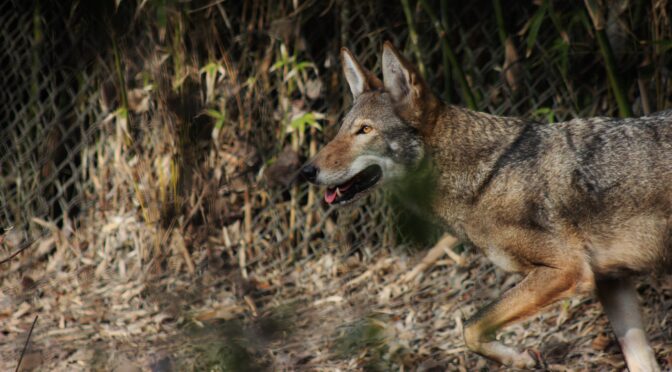
A pair of eyes emerged from the bushes in the darkness. There had recently been a mountain lion sighting in the area, so I raised my rifle and looked through the scope. What I saw wasn’t a mountain lion. It looked like a red wolf.
I lowered the rifle.
That encounter has stayed with me for years, and it opens a new episode of Dark Outdoors®, “The Night I Had a Red Wolf in My Crosshairs.” The episode explores that experience, other strange wild canine encounters and the fascinating story of an animal that once roamed Texas and Louisiana but came perilously close to disappearing forever.
Listen to the full Dark Outdoors® episode:
Apple Podcasts:
https://podcasts.apple.com/us/podcast/the-night-i-had-a-red-wolf-in-my-crosshairs/id1630809603?i=1000788048061
Spotify:
https://open.spotify.com/episode/0gtxNaNdRgw1PSBYJAbnTS?si=oMTRler3T-2zW3qRAG-SggI
Texas Coyotes With Red Wolf DNA?
There is another fascinating chapter to this story.
Researchers studying wild canines along the Texas Gulf Coast have discovered animals carrying significant amounts of red wolf ancestry. That raises intriguing questions about whether genetic remnants of the wolves that once inhabited this region have survived within coastal coyote populations.
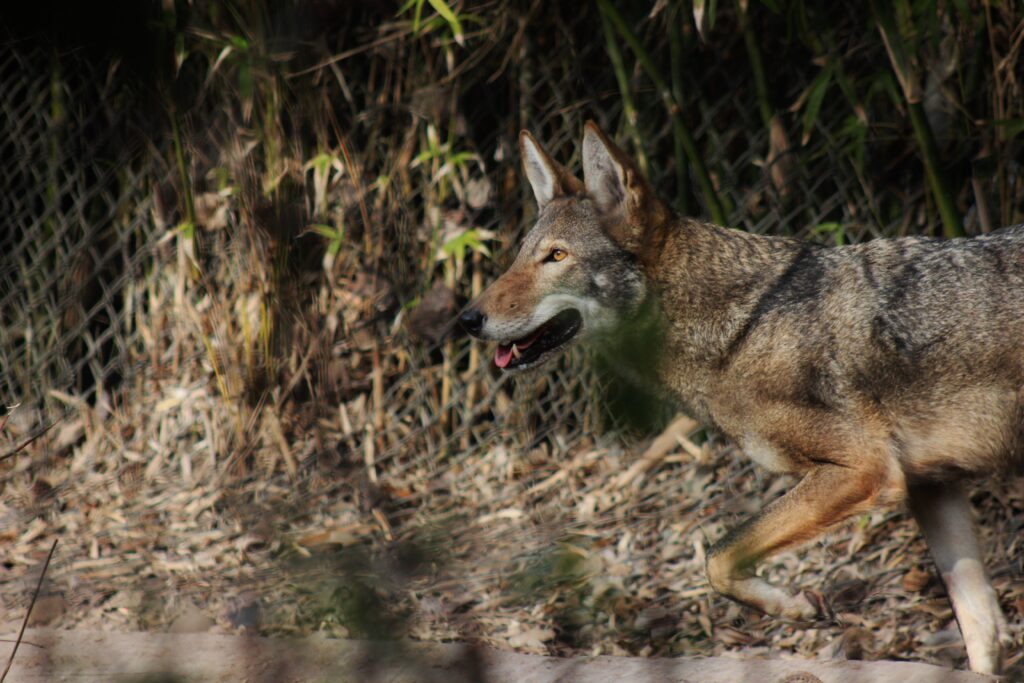
I explored that story in a video examining Texas coyotes, red wolf genetics and the remarkable possibilities scientists are considering for conserving those genes.
Watch “Texas Coyotes — 70% Red Wolf? The Cloning Plan” on YouTube:
https://youtu.be/ZB0iVEcGp44?si=IoPli3VoyXMQMJk1
The Red Wolf’s Disappearing World
The red wolf (Canis rufus) is one of North America’s great wildlife conservation stories.
Red wolves once occupied portions of the eastern and south-central United States, including Texas and Louisiana. By the 20th century, persecution, habitat changes and hybridization with coyotes helped push them toward extinction in the wild.
A small number of animals were captured along the Texas-Louisiana Gulf Coast to establish a captive breeding program. Those animals became the foundation for an effort that prevented the red wolf from disappearing completely.
Today, the only recognized wild population exists in eastern North Carolina.
That makes the discovery of red wolf ancestry in Gulf Coast canines especially fascinating. The wolves themselves may have disappeared from Texas, but some of their genetics apparently did not.
What Was in My Crosshairs?
I’m not claiming that the animal I encountered that night was a genetically pure red wolf.
There was no DNA test. I didn’t capture it. I didn’t have a biologist standing beside me.
I can only tell you what happened.
I saw those eyes emerge from the bushes. With a mountain lion recently reported in the area, I raised my rifle. When I got a better look at the animal, what I saw looked like a red wolf.
So I lowered the gun.
Years later, as research began revealing the surprising amount of red wolf ancestry surviving in some Gulf Coast coyotes, encounters like mine became even more interesting.
Could I have encountered an animal carrying substantial red wolf genetics?
I don’t know.
But unlike a lot of mysterious wildlife stories, we now know there really are wild canines along the Texas Gulf Coast carrying genetic echoes of the red wolf.
And that makes this story worth another look.
Hear the Full Story
In the complete Dark Outdoors episode, I tell the story of that night and explore other unusual encounters I’ve had with wild canines over the years.
Listen to “The Night I Had a Red Wolf in My Crosshairs”:
Apple Podcasts:
https://podcasts.apple.com/us/podcast/the-night-i-had-a-red-wolf-in-my-crosshairs/id1630809603?i=1000788048061
Spotify:
https://open.spotify.com/episode/0gtxNaNdRgw1PSBYJAbnTS?si=oMTRler3T-2zW3qRAG-SggI
Then go deeper into the Texas red wolf story with our video on Gulf Coast coyotes, red wolf DNA and the efforts to preserve those remarkable genetics:
Watch on YouTube:
https://youtu.be/ZB0iVEcGp44?si=IoPli3VoyXMQMJk1
Sometimes the most interesting wildlife mysteries aren’t about creatures science says don’t exist.
They’re about animals we know existed—and the pieces of them that may still be running wild.
Because the outdoors has a dark side.
Chester Moore
Follow Chester Moore on the following social media platforms
@gulfgreatwhitesharksociety on Instagram
To support the efforts of Higher Calling Wildlife® click here.
Subscribe to the Dark Outdoors podcast on all major podcasting platforms.
Higher Calling Wildlife on Facebook
Email Chester at chester@chestermoore.com.