Tag Archives: nancy guthrie

The Nancy Guthrie Case, Part 2: The High-Tech Predator?

Predators evolve.

Anyone who spends enough time outdoors understands that reality. Mature whitetails alter their travel patterns when hunting pressure increases. Coyotes quickly learn to avoid traps and adapt to suburban neighborhoods, slipping through drainage ditches and greenbelts where few people ever notice them. Even mountain lions adjust their movements to avoid human activity while taking advantage of opportunities their prey never sees coming.

Human predators evolve as well.

That thought stayed with me after spending more than an hour talking with Daniel of the Drunk Turkey Show about the disappearance of Nancy Guthrie. In Part One of this series, we explored how the isolation of the Arizona desert may have worked to the advantage of whoever abducted her. The winding roads, sparse development, weak cellular coverage and dark-sky ordinances created an environment where someone familiar with the terrain could move with confidence while remaining remarkably difficult to detect.

Listen to “High-Tech Predator? The Nancy Guthrie Case – Part 2” here:

🎧 Spotify:
https://open.spotify.com/episode/1e93LfvHz4PpL5jTDwiBQ0?si=Satgg9hiSCaNMjuoFtnyKA

🍎 Apple Podcasts:
https://podcasts.apple.com/us/podcast/high-tech-killer-the-nancy-guthrie-case-part-2/id1630809603?i=1000779803058

🌲 Listen on your favorite platform:
https://linktr.ee/darkoutdoorspodcast

If you enjoy Dark Outdoors, please follow the show, leave a rating and review, and share this episode with someone who enjoys true crime, the outdoors, and investigative storytelling.

As our conversation continued, however, Daniel shifted the discussion in a different direction. His focus wasn’t simply on the landscape. He wondered whether the person responsible possessed something else that has become increasingly valuable to modern criminals: a sophisticated understanding of technology.

“I’ve been saying this for a minute that I think he’s very tech-savvy,” Daniel said during our interview. It wasn’t presented as a conclusion supported by investigators, but as an observation based on publicly known details surrounding the case and how the offender appeared to operate. That distinction matters. The goal isn’t to assign capabilities that law enforcement hasn’t confirmed. Instead, it’s to examine a broader question that extends far beyond one investigation.

Have violent predators begun evolving faster than many of us realize?
For generations, outdoorsmen learned to read physical sign. A fresh boot print crossing a sandy wash, broken mesquite limbs along a game trail or tire tracks disappearing onto an isolated ranch road could tell an experienced observer a remarkable story. Today’s investigators still read those clues, but they have also become students of an entirely different landscape. Cell phone records, GPS data, vehicle telematics, surveillance cameras, Bluetooth connections and cloud storage now reveal patterns that simply didn’t exist twenty years ago.

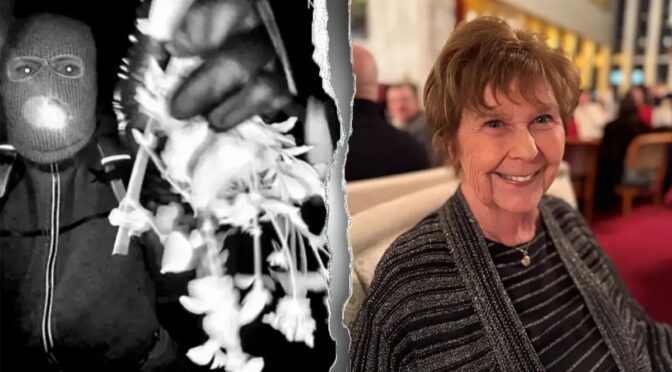
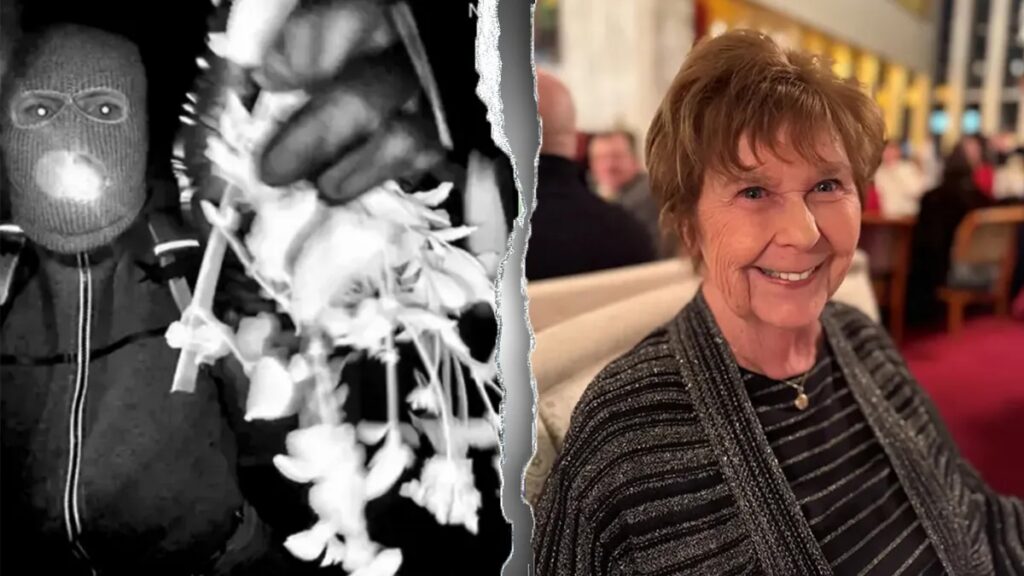
Ironically, the Nancy Guthrie investigation demonstrates that point. Publicly released evidence shows investigators were eventually able to recover valuable images from a doorbell camera that initially appeared inaccessible. Those recovered images, showing a masked individual outside the residence carrying a backpack, became one of the most important publicly released developments in the case. The recovery itself illustrates something every investigator understands: digital evidence often survives even when people believe it has disappeared.

That technological landscape works both ways.

It provides investigators with powerful tools, but it also gives offenders opportunities previous generations never possessed. Consumer drones can map remote terrain. Public satellite imagery allows anyone to examine neighborhoods from a computer. Social media often reveals routines, favorite hiking trails and even when someone is away from home. Fitness apps, geotagged photographs and online property records create an enormous amount of publicly available information that can be used for entirely legitimate purposes—or exploited by someone with criminal intent.
One of the more interesting moments in my conversation with Daniel involved the backpack visible in the recovered surveillance images. The FBI has publicly identified the apparent model in hopes someone recognizes it, but beyond that, little has been confirmed. Daniel discussed theories circulating among independent researchers about what someone operating in such an isolated environment might choose to carry, including the possibility of modern electronic equipment. There is no public evidence that investigators have concluded a drone or similar technology was used in this case, and it would be irresponsible to suggest otherwise. Still, the discussion highlights how dramatically the landscape has changed. Today’s offenders have access to equipment that once belonged exclusively to the military or specialized law enforcement units.

That reality shouldn’t create fear. It should encourage awareness.

One of the recurring themes throughout my work on Dark Outdoors is that the greatest dangers in wild places often don’t come from wildlife. They come from people willing to exploit those places. Hunters, anglers, hikers and campers routinely venture into areas where cell service is weak, neighbors are miles away and help may take precious minutes to arrive. Those same conditions that make the outdoors appealing can also provide opportunities for someone intent on doing harm.

One point Daniel and I agreed on throughout our conversation is that no amount of technology replaces awareness. Criminals may become more sophisticated, but so can the people who enjoy the outdoors. Hunters have always been observant by necessity. They notice a truck parked where one normally isn’t. They recognize fresh tire tracks on a lease road or an unfamiliar camp set up in a remote area. Anglers often remember the vehicle parked at the boat ramp before daylight or the person who seemed more interested in watching people than fishing.

Those instincts remain just as valuable today as they were decades ago.

Technology has undoubtedly changed the investigative landscape, but it hasn’t changed the importance of trusting your instincts. If something feels out of place, it probably deserves a second look. Avoid broadcasting your exact location in real time. Let someone know where you’re going and when you expect to return. Pay attention to people who appear to be conducting surveillance rather than enjoying the outdoors. None of those precautions are signs of paranoia. They’re simply extensions of the situational awareness outdoorsmen have practiced for generations.

The Nancy Guthrie investigation is still unfolding, and many of its most important facts remain known only to investigators. Neither Daniel nor I pretend to know exactly what happened that night. What our discussion ultimately revealed was something broader than one tragic case. Predators adapt. They study their environment. They learn from previous crimes. They take advantage of new tools when those tools provide an advantage.

The rest of us have to evolve, too.

Whether you’re hiking a desert trail, hunting a secluded lease in Texas or simply walking your dog along a wooded greenbelt, awareness remains your greatest defense. Hunters often say every animal leaves sign if you know how to read it. The same may be true of human predators. Today, however, those signs may be found not only in the dirt beneath our boots but also in the digital footprints left behind.

That may prove to be one of the most enduring lessons of the Nancy Guthrie case.

Chester Moore

Follow Chester Moore on the following social media platforms

Chester Moore’s YouTube.

@thechestermoore on Instagram

@gulfgreatwhitesharksociety on Instagram

To support the efforts of Higher Calling Wildlife® click here.

Subscribe to the Dark Outdoors podcast on all major podcasting platforms.

Higher Calling Wildlife on Facebook

Email Chester at chester@chestermoore.com.
What the Nancy Guthrie Case May Reveal About the Next Generation of Predators (Part One)

The first thing that caught my attention about the Nancy Guthrie case wasn’t that she disappeared.

Sadly, America sees missing person cases every day. Most never become national news. This one did because Guthrie is the mother of NBC “Today” co-anchor Savannah Guthrie. Like millions of Americans, I followed the headlines as investigators searched for answers. But as more information became public, it wasn’t the celebrity connection that kept drawing me back to the story.

It was the setting.

During one of the first media briefings, investigators mentioned the rugged desert surrounding Guthrie’s home. There was even discussion of mountain lions and coyotes. Having spent more than three decades covering wildlife and dangerous situations in the outdoors, that immediately struck me as odd. A mountain lion attack doesn’t simply erase someone. It leaves unmistakable evidence. From everything investigators were saying, it was obvious this was something entirely different.

Then I pulled up aerial maps of the neighborhood.

I found myself studying the winding roads, the homes backed against open desert and the natural terrain surrounding the community. Instead of looking at the case only through the lens of a missing person investigation, I began looking at the landscape itself. What advantages might it offer someone intent on committing a crime? What challenges would it create for investigators trying to reconstruct what happened?

Those questions led me to invite Daniel, host of the Drunk Turkey Show and a former law enforcement officer, to join me on Dark Outdoors. His program has closely followed the Guthrie investigation, and I wanted to hear his perspective on something that had been bothering me since I first saw the maps.

Listen to the Dark Outdoors® interview with Daniel from the Drunk Turkey Show:

Did the location itself help whoever committed this crime?

“I think it could have been an advantage to the person,” Daniel said. “The area definitely was an advantage to the guy.” He pointed to several factors that stood out immediately, including the neighborhood’s somewhat rural character, less-than-ideal cellular coverage and the darkness surrounding the community.

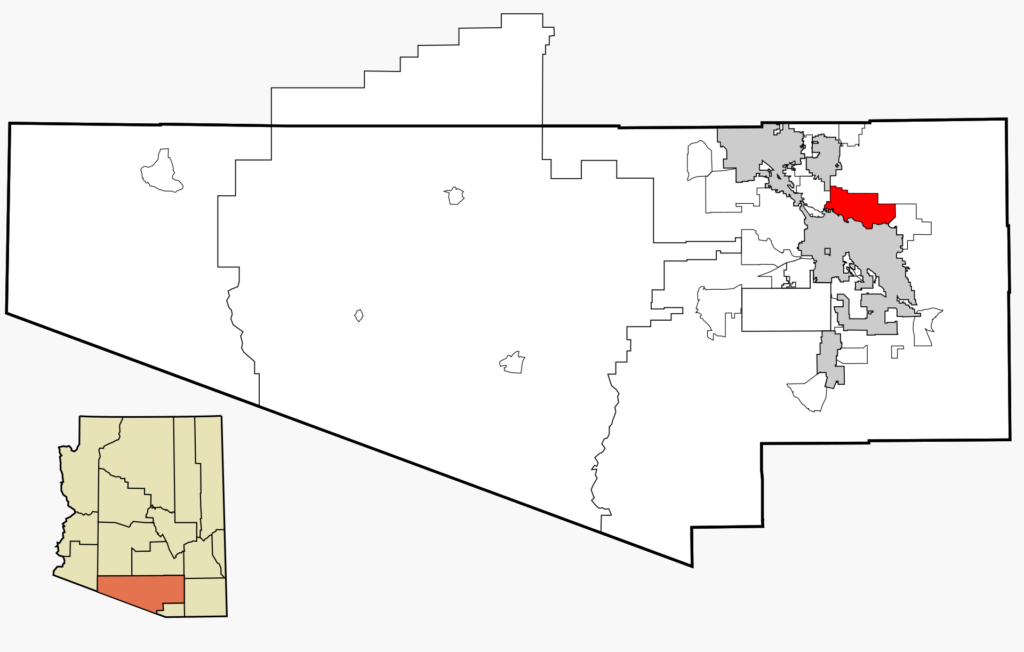
The Catalina Foothills community.

That answer immediately changed the direction of our conversation.

Most public discussions surrounding high-profile criminal investigations focus on suspects, motives or forensic evidence. Daniel instead focused on geography. Before talking about who might have committed the crime, he talked about why this particular place may have appealed to someone willing to commit it.

One aspect of the neighborhood especially caught his attention.

“They don’t have any corner lights,” Daniel said. “It’s super dark.”

He believes those conditions suggest whoever committed the crime may have possessed a familiarity with the area that extended beyond simply driving through it.

“That’s one of the things that makes me feel like the guy’s somewhat familiar with the area, whether that’s he’s from the area or he did a certain amount of surveillance in the area,” Daniel said.

That observation shouldn’t be confused with evidence identifying a suspect. Daniel wasn’t claiming investigators had reached that conclusion. He was explaining how experienced investigators often begin evaluating a crime scene. They study the environment. They look at access routes, visibility, lighting and how someone could move into and out of an area without attracting attention.

Listening to him reminded me of something I’ve noticed while reporting on outdoor-related crime over the last three decades.

Some of the most challenging investigations I’ve covered haven’t unfolded deep in the wilderness or in the middle of crowded cities. They’ve occurred in those places where neighborhoods blend into natural landscapes—desert communities, wooded subdivisions, greenbelts and trail systems where people seek peace, privacy and a connection with the outdoors. Most of those places are incredibly safe. But when someone with evil intentions understands the terrain better than everyone else, the landscape itself can become an advantage.

Daniel pointed to another factor that deserves consideration.

From what he understands, cellular coverage in portions of the area isn’t ideal. That, he said, could make it more difficult to narrow the location of devices or reconstruct movements during critical moments of the investigation. At the same time, he noted the neighborhood is not isolated wilderness. It contains numerous homes and regular vehicle traffic, making the investigative picture even more complicated.

That complexity is one reason the Guthrie case has remained so compelling. Cases like this remind us that modern investigations rarely depend on one piece of evidence. Instead, detectives assemble hundreds or even thousands of small details until they begin forming a clearer picture of what happened.

As our discussion continued, however, Daniel shifted away from geography and began talking about something that immediately caught my attention.

Technology.

Not technology used by investigators.

Technology that may have been understood—or even used—by whoever committed the crime.

That immediately made me think of another case that forever changed how many investigators look at modern offenders.

Bryan Kohberger.

The man accused of murdering four University of Idaho students wasn’t simply another homicide suspect. Prosecutors allege he attempted to minimize the digital trail surrounding the crime, altered his driving route afterward and possessed an academic interest in criminal investigations. Ultimately, investigators used a combination of DNA, surveillance footage and digital evidence to build the case against him.

Whether Kohberger intended it or not, that investigation demonstrated something important.

Today’s offenders aren’t just learning how to commit crimes.

Some appear to be learning how investigators solve them.

I asked Daniel whether he believed we may be witnessing a new generation of offenders—people who understand cameras, digital evidence and modern investigative techniques better than many criminals of the past.

His answer surprised me.

He said what first pushed him in that direction wasn’t one dramatic piece of evidence. It was a collection of small details that, when viewed together, painted a very different picture.

He pointed to a camera system that appeared to record activity before and after a critical period but not during it. He mentioned reports that multiple nearby homes experienced internet issues that night. He noted what he believed was an individual who appeared aware of where cameras were positioned and how they functioned. None of those observations establish what happened or identify a suspect, but together they caused him to begin looking at the case through a different lens.

As Daniel laid out his reasoning, I realized we were no longer discussing only the Nancy Guthrie investigation.

We were talking about whether violent offenders themselves may be evolving.

For decades, crime stories have often portrayed killers as impulsive or reckless. Increasingly, some investigators are confronting offenders who study forensic science, understand digital technology, research investigative procedures and attempt to anticipate how law enforcement will respond. Cases like Kohberger’s suggest that possibility is no longer theoretical.

Then Daniel made another observation that stopped me.

He believes there may be one more piece to the puzzle in the Guthrie case—one that could push this conversation even further into the modern age.

It wasn’t another witness.

It wasn’t DNA.

It wasn’t a cellphone.

It was the possibility that the person responsible may have understood technology in ways most people haven’t even considered.

That discussion led us into cameras, internet disruptions and one possibility that sounds more like something from a crime thriller than a real investigation.

A drone.

Next: Part Two — Cameras, Drones and the Rise of the High-Tech Predator.

Chester Moore

Follow Chester Moore on the following social media platforms

Chester Moore’s YouTube.

@thechestermoore on Instagram

@gulfgreatwhitesharksociety on Instagram

To support the efforts of Higher Calling Wildlife® click here.

Subscribe to the Dark Outdoors podcast on all major podcasting platforms.

Higher Calling Wildlife on Facebook

Email Chester at chester@chestermoore.com.